What Is Guest Posting? Benefits, Strategies, and Best Practices
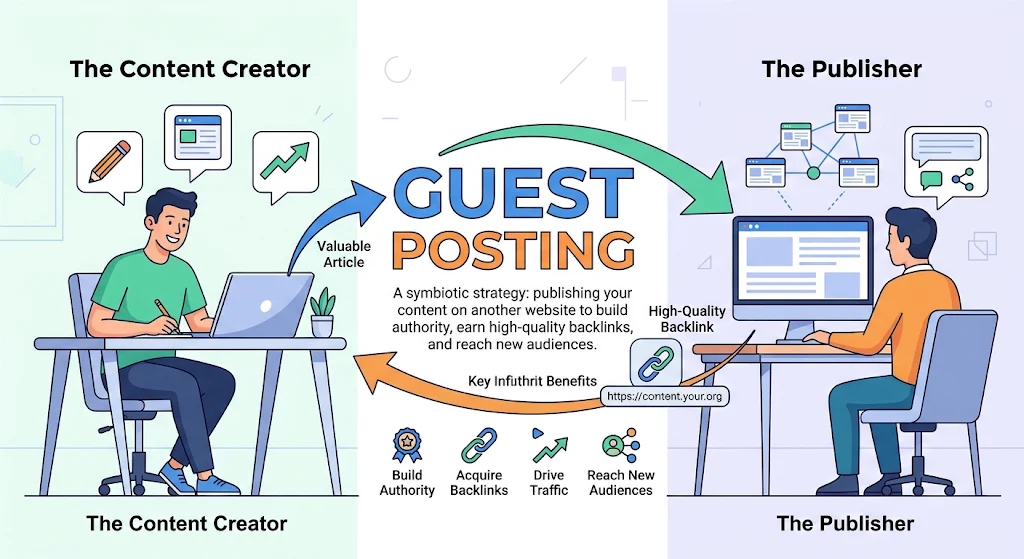
Guest posting is one of the most widely used content marketing and relationship-building strategies in digital marketing. It allows businesses, bloggers, and website owners to publish valuable content on other relevant websites to reach new audiences, establish industry authority, and build meaningful online relationships.
For businesses looking to improve their online visibility, guest posting can also support a broader search engine optimization (SEO) strategy. When approached correctly, it can help brands earn relevant backlinks, attract referral traffic, and strengthen their reputation within their industry.
However, successful guest posting involves much more than publishing an article with a backlink. It requires relevant website selection, high-quality content, a clear outreach strategy, and a focus on providing genuine value to readers.
In this guide, we will explain what guest posting is, how it works, its major benefits, and the best practices businesses should follow to achieve meaningful results.
What Is Guest Posting?
Guest posting, also known as guest blogging, is the practice of writing and publishing an article on another person’s or company’s website. The contributor provides useful, original content, while the publishing website receives fresh material that benefits its audience.
In return, the guest author may receive an author bio, brand mention, or relevant link to their website, depending on the publisher’s editorial guidelines.
For example, imagine you operate a digital marketing agency. You could write an informative article about effective SEO strategies for a business blog that covers marketing and entrepreneurship. The article introduces your expertise to a new audience and may include a relevant reference to your agency.
This arrangement can benefit both parties:
- The publisher receives informative content for its readers.
- The contributor gains exposure to a relevant audience.
- Readers discover useful information from industry professionals.
- Both parties have an opportunity to build professional relationships.
The most successful guest posting campaigns prioritize relevance, content quality, and audience value rather than simply collecting backlinks.
How Does Guest Posting Work?
Guest posting generally follows a straightforward process. However, each stage requires careful planning to ensure the published content meets the publisher’s standards and supports your marketing objectives.
1. Find Relevant Websites
The first step is identifying websites that publish content related to your industry or target audience.
For example, a company offering financial software might look for business, finance, accounting, or technology publications.
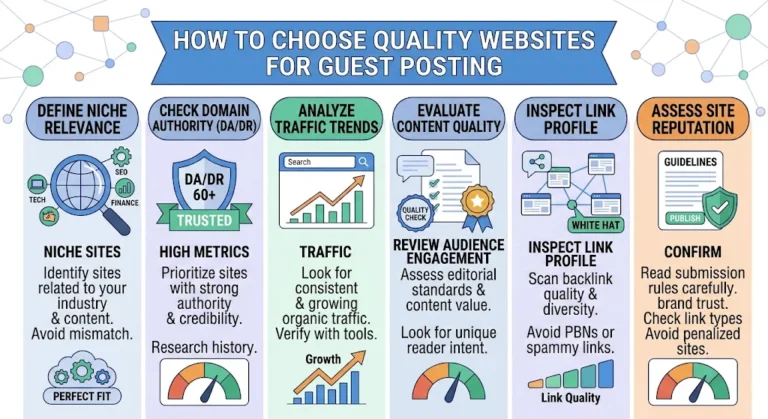
When evaluating potential websites, consider:
- Relevance to your niche.
- Content quality and editorial standards.
- Organic search visibility.
- Audience engagement.
- Website reputation and backlink profile.
- Whether the website publishes genuine, useful articles.
Choosing relevant publishers is more valuable than targeting websites simply because they advertise high SEO metrics.
2. Review Guest Posting Guidelines
Before contacting a publisher, review its submission requirements.
Some websites accept contributions from external writers, while others have specific editorial processes. Guidelines may explain preferred topics, article length, formatting, linking policies, and author requirements.
Understanding these rules helps you prepare a suitable pitch and reduces the likelihood of rejection.
3. Create High-Quality Content
Once a suitable publishing opportunity is identified, prepare an original article that addresses the publisher’s audience.
Your article should:
- Answer a specific reader question.
- Provide accurate and useful information.
- Include relevant examples.
- Use clear headings and logical formatting.
- Avoid unnecessary promotional language.
- Follow the publisher’s editorial guidelines.
A guest post should be valuable even if readers never click the links included in it.
4. Submit the Article for Review
After completing the article, submit it according to the publisher’s instructions.
The editorial team may review the content, request revisions, adjust formatting, or approve it for publication.
Some publishers also offer paid editorial placements. Businesses should evaluate these opportunities carefully and ensure that any commercial relationship complies with applicable search engine spam policies.
5. Monitor the Published Article
Once the article goes live, check that the content displays correctly and that all approved links work.
You can also monitor referral traffic, engagement, brand mentions, and relevant SEO performance over time.
Remember that a backlink does not guarantee improved rankings. Search engines evaluate many factors when determining which pages appear in search results.
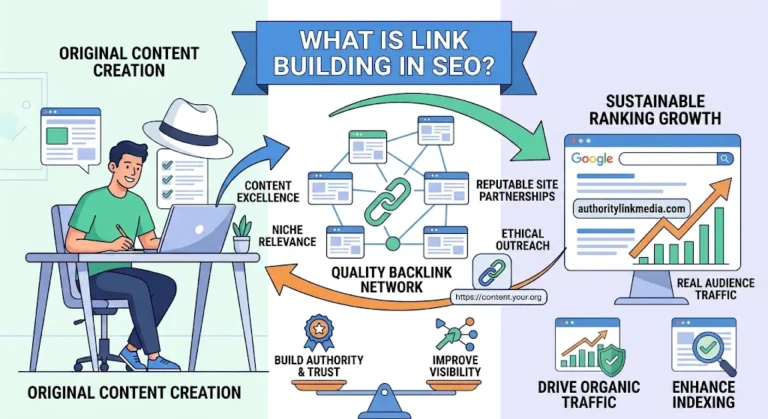
Read More: What Is Link Building in SEO?
What Are the Benefits of Guest Posting?
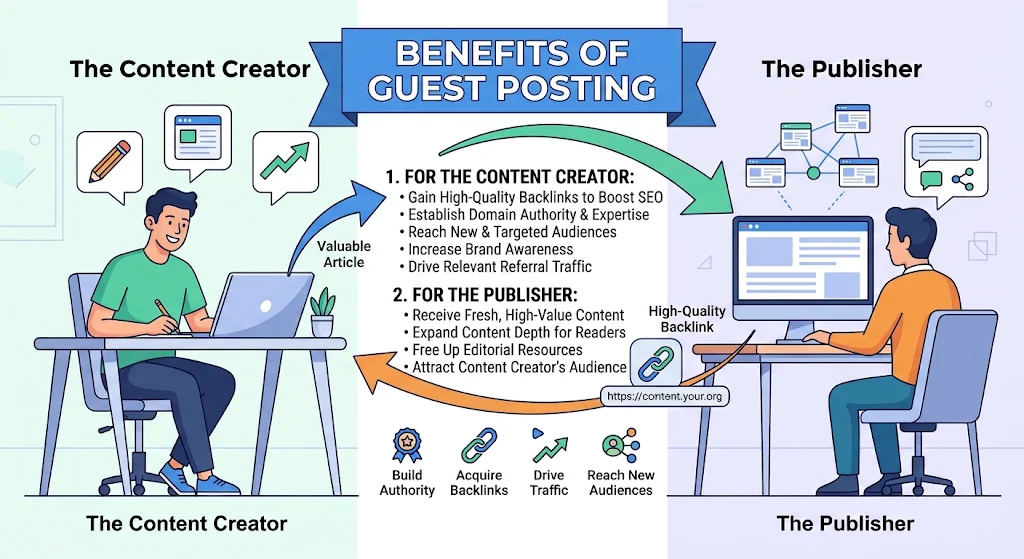
Guest posting can support several important digital marketing objectives. Its value depends on the quality of the publishing website, the usefulness of the article, and the relevance of the audience.
1. Build Relevant Backlinks
One of the most recognized benefits of guest posting is the opportunity to earn relevant backlinks.
A backlink is a hyperlink from one website to another. Search engines may use links as part of their systems for discovering and understanding web pages.
When an authoritative and relevant website references your content naturally, it can help search engines understand the relationship between your website and a particular topic.
However, not every backlink provides the same value. Links should come from trustworthy sources and serve a genuine editorial purpose.
2. Increase Brand Awareness
Publishing content on established industry websites introduces your business to people who may not have discovered your brand otherwise.
For example, a marketing agency contributing an article to a respected business publication can reach entrepreneurs, marketers, and business owners who are already interested in digital growth.
Repeated exposure through useful content can help make your brand more recognizable within your industry.
3. Reach a Relevant Audience
Guest posting gives businesses access to audiences that already consume content related to their products, services, or expertise.
This can be particularly helpful for companies entering new markets or targeting specific professional communities.
The key is selecting websites whose readers are likely to be interested in what your business offers.
4. Establish Industry Authority
Consistently publishing helpful articles on relevant websites can demonstrate your knowledge and experience.
When readers find your contributions informative, they may begin to recognize your brand as a useful source of industry information.
This can strengthen your professional reputation and support long-term trust.
5. Generate Referral Traffic
A relevant link within a useful article can encourage readers to visit your website for additional information.
For instance, a guest article discussing website optimization might reference a detailed guide or service page on your website.
Visitors arriving through these links may already have an interest in your industry, making referral traffic a useful marketing opportunity.
6. Build Professional Relationships
Guest blogging can create opportunities to connect with website owners, editors, content marketers, and other professionals.
These relationships may lead to future collaborations, interviews, content partnerships, and additional publishing opportunities.
Strong professional relationships can provide value beyond a single published article.
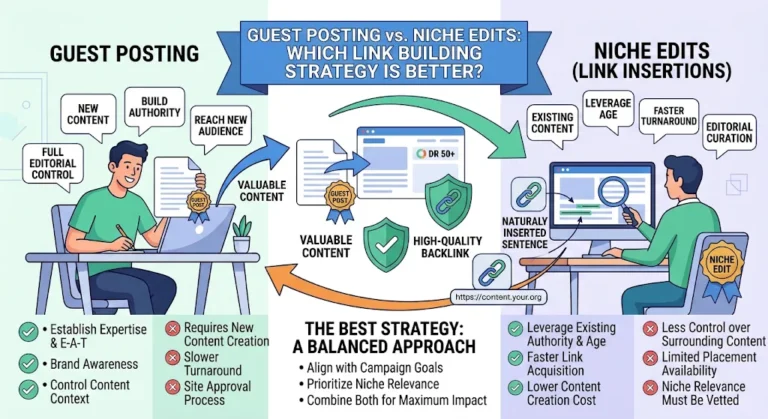
Read Also: Guest Posting vs. Niche Edits: Which Link Building Strategy Is Better?
Guest Posting Strategies That Deliver Better Results
A successful guest posting campaign needs a clear strategy. Randomly contacting websites or publishing articles without considering audience relevance can waste time and resources.
Here are some practical approaches to improve your results.
Focus on Niche Relevance
Prioritize websites that publish content related to your business, products, or services.
A relevant publication with a smaller but engaged audience may offer more meaningful exposure than a large website covering unrelated subjects.
Consider topical relevance, audience interests, and editorial quality before making a decision.
Research Potential Publishers
Do not rely on a single SEO metric when evaluating websites.
Review several indicators, including:
- Organic traffic trends.
- Website content quality.
- Topical relevance.
- Existing backlink profile.
- Publishing consistency.
- Audience engagement.
- Signs of excessive sponsored or low-quality content.
Tools such as Ahrefs, Semrush, and Google Search Console can help with different aspects of website research and performance analysis.
Third-party authority metrics are useful for comparison, but they are not official Google ranking factors.
Develop Original Article Ideas
Publishers are more likely to consider content that offers something useful to their readers.
Instead of pitching generic topics, research the website’s existing content and identify information gaps.
Consider creating:
- Practical industry guides.
- Step-by-step tutorials.
- Expert insights.
- Case studies based on genuine data.
- Educational articles.
- Comparisons of relevant tools or approaches.
Original ideas make your contribution more valuable and help avoid repetitive content.
Build Personalized Outreach
When contacting website owners or editors, avoid sending generic messages.
A good outreach email should introduce your business, explain why you are contacting that particular publication, and suggest a relevant article idea.
Keep your communication professional, concise, and respectful of the publisher’s time.
Prioritize Long-Term Relationships
Guest posting should not be treated as a one-time backlink acquisition activity.
Maintaining professional relationships with reliable publishers can create opportunities for future content collaborations.
Consistently providing useful material also helps establish your brand as a dependable contributor.
What Makes a High-Quality Guest Post?
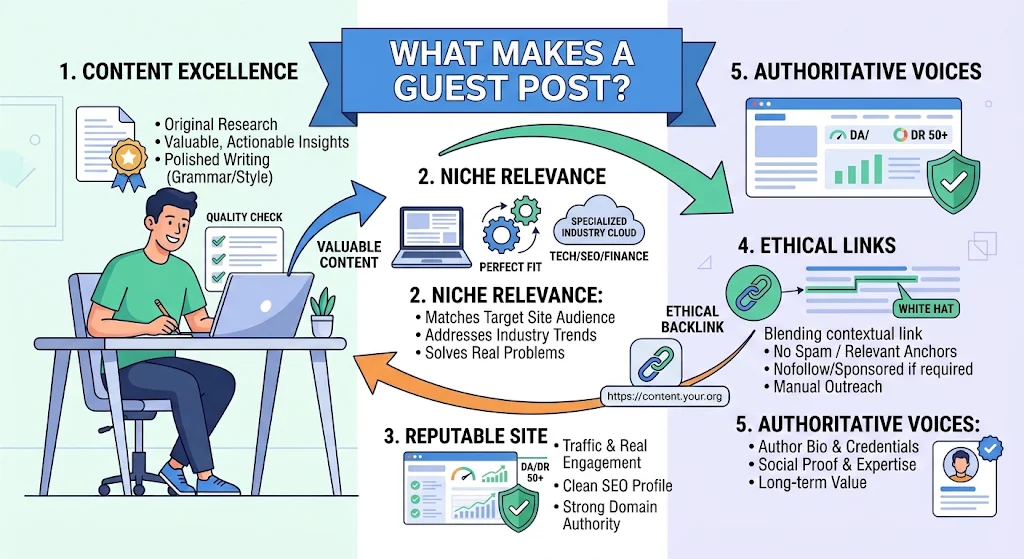
Not every guest post delivers the same value. The quality of the content and the publishing website plays an important role in determining its usefulness.
Here are some characteristics of a strong guest post.
Original and informative content: The article should provide useful information rather than repeat existing material without adding anything new.
Relevant publishing website: The website should cover subjects that are meaningfully connected to your industry or target audience.
Natural link placement: Any included links should support the article and help readers find additional relevant resources.
Professional writing: The article should have clear explanations, accurate information, proper grammar, and logical formatting.
Genuine editorial standards: The publisher should review content and maintain a website that offers real value to its audience.
Useful reader experience: The article should be easy to understand, well organized, and free from unnecessary promotional material.
A quality guest post is not simply an article containing a backlink. It is a useful contribution that makes sense for the publishing website and its readers.
Guest Posting Best Practices to Follow
To make guest posting more effective and sustainable, follow these important practices.
1. Write for People First
Create content that answers real questions and provides practical solutions. Avoid writing articles solely to insert keywords or backlinks.
2. Choose Websites Carefully
Evaluate each publishing opportunity based on relevance, reputation, content quality, and audience value.
3. Use Natural Anchor Text
Anchor text is the clickable text used in a hyperlink. It should describe the destination page naturally.
Avoid repeatedly using exact-match commercial keywords as anchor text across multiple placements. A natural and varied linking approach is generally preferable.
4. Avoid Low-Quality Link Schemes
Stay away from private blog networks, automated link schemes, excessive link exchanges, and websites created primarily to sell backlinks.
Google’s spam policies address manipulative link practices, including certain paid links intended to influence search rankings.
When a link involves payment or another commercial arrangement, appropriate qualification such as rel="sponsored" or rel="nofollow" should be used where applicable.
5. Measure Campaign Performance
Track meaningful indicators such as:
- Number of quality articles published.
- Referral traffic.
- Relevant brand mentions.
- Publisher and audience engagement.
- Backlink status and attributes.
- Changes in organic search performance.
These measurements can help you understand which publishing opportunities contribute most to your business objectives.
Common Guest Posting Mistakes to Avoid
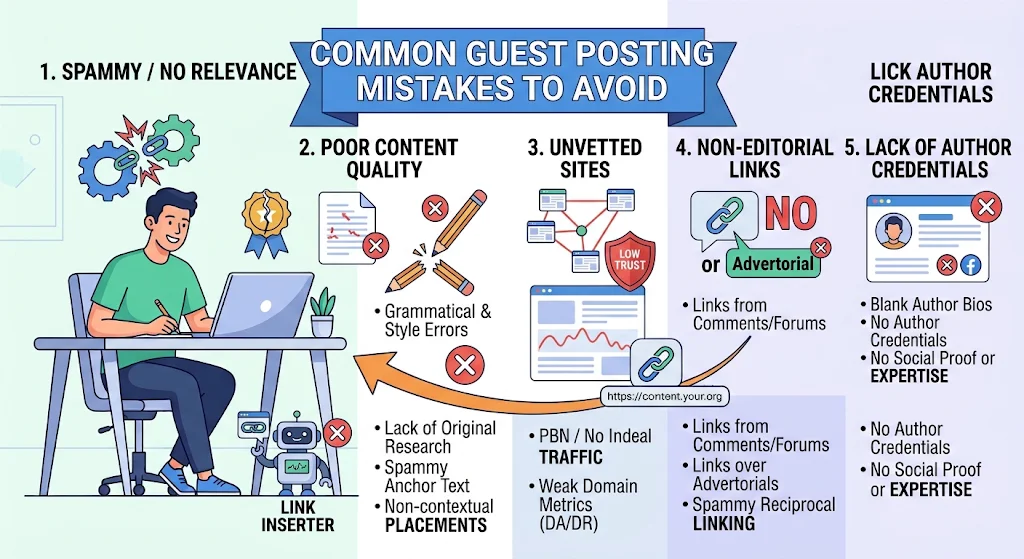
Even a well-planned campaign can become ineffective when certain mistakes are repeated.
Here are some common problems businesses should avoid:
Choosing websites based only on authority metrics: A high third-party score does not automatically mean a website is relevant or trustworthy.
Publishing low-quality articles: Poorly researched or overly promotional content offers little value to readers.
Using excessive keyword-rich anchors: Repetitive commercial anchor text can make a backlink profile look unnatural.
Ignoring website relevance: Publishing on unrelated websites simply to obtain links is not a sustainable approach.
Expecting immediate SEO results: Search visibility can take time to change, and no guest post can guarantee a particular ranking.
Ignoring editorial guidelines: Submitting content that does not match a publisher’s requirements can damage professional relationships and reduce approval chances.
Avoiding these mistakes helps businesses focus on meaningful publishing opportunities rather than short-term link acquisition.
Should Businesses Invest in Guest Posting Services?
Managing a guest posting campaign requires research, content creation, publisher outreach, editorial coordination, and performance monitoring.
For businesses with limited time or internal marketing resources, working with a professional guest posting agency can make the process more manageable.
A reliable agency can help with:
- Identifying relevant publishing websites.
- Reviewing website quality and relevance.
- Planning content around business objectives.
- Creating original guest articles.
- Coordinating with publishers.
- Managing publication and link verification.
- Providing transparent placement reports.
However, businesses should carefully evaluate any agency before choosing a service provider.
Ask about its publisher selection process, content standards, link policies, reporting practices, and approach to Google’s spam policies.
A trustworthy provider should prioritize transparency, relevance, and content quality rather than promising guaranteed rankings or unrealistic SEO results.
Final Thoughts
Guest posting remains a useful content marketing and relationship-building strategy when it is approached with the right priorities.
It can help businesses reach relevant audiences, build brand awareness, earn editorially appropriate backlinks, and establish industry credibility.
However, successful guest posting is not about publishing as many articles as possible. It is about choosing suitable websites, creating valuable content, and building genuine relationships with publishers.
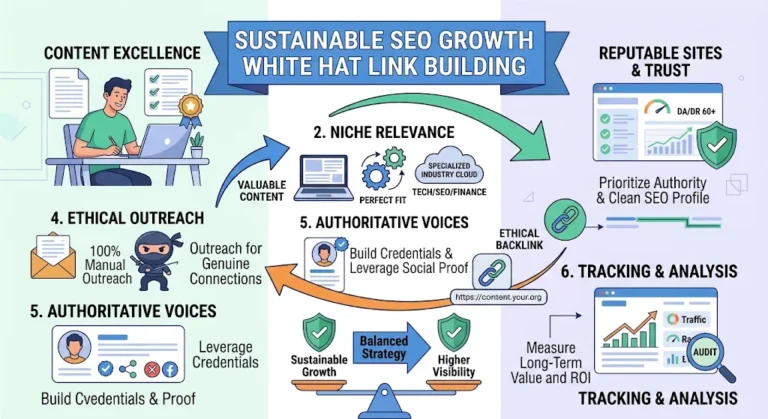
By following ethical link building practices and focusing on reader value, businesses can make guest posting a meaningful part of their broader digital marketing strategy.
If you want to strengthen your online presence through relevant publishing opportunities, Authority Link Media can help you explore guest posting and link building solutions designed around your business goals.
Explore our guest posting services and discover opportunities to grow your brand through quality content and relevant publisher relationships.