Guest Posting vs. Niche Edits: Which Link Building Strategy Is Better?
Building a strong backlink profile is an important part of a comprehensive search engine optimization (SEO) strategy. Businesses use different link building techniques to improve online visibility, reach relevant audiences, and establish their authority within their industries.
Two commonly discussed approaches are guest posting and niche edits.
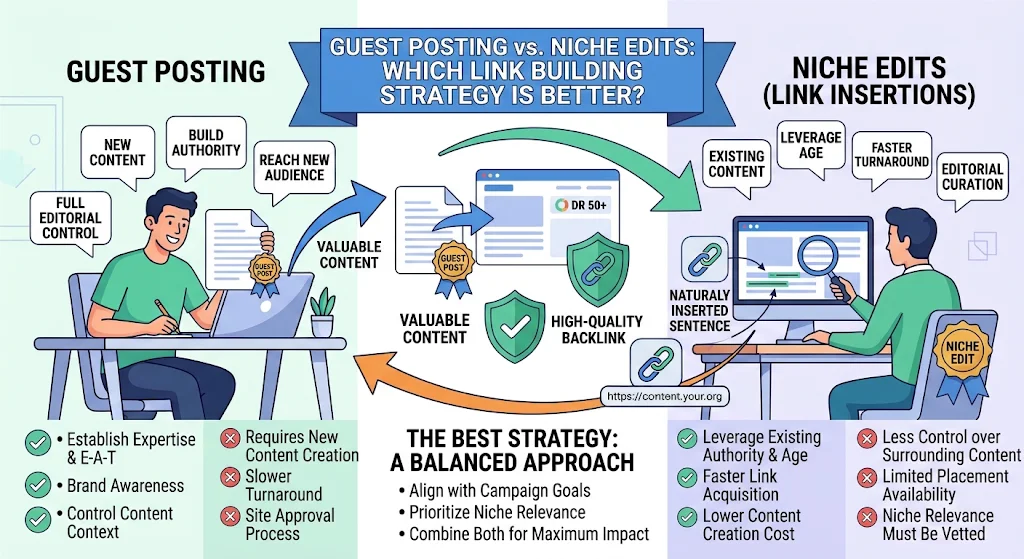
Both strategies can create opportunities for relevant contextual links, but they work in different ways. Guest posting involves creating and publishing new content on another website, while niche edits involve adding a relevant reference or link to an existing article.
Understanding these differences can help businesses choose an approach that fits their content marketing objectives, publishing opportunities, and overall SEO strategy.
In this guide, we will explain guest posting and niche edits, compare their advantages and disadvantages, and explore which strategy may be more suitable for your business.
What Is Guest Posting?
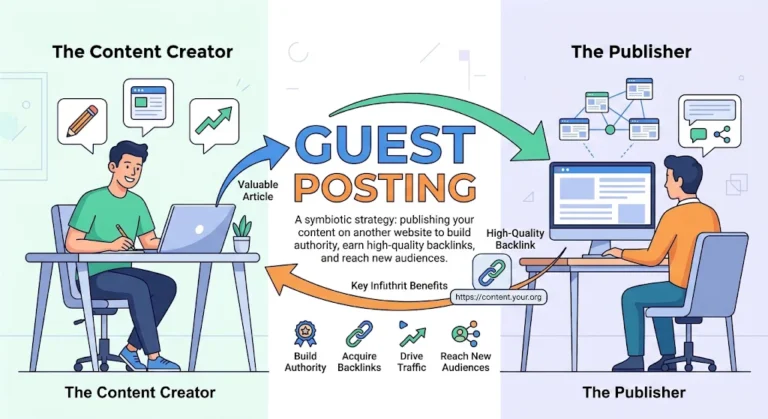
Guest posting, also known as guest blogging, is the process of writing and publishing an original article on another website.
The contributor provides useful information to the publisher’s audience, while the publishing website receives fresh content that fits its editorial standards.
For example, a digital marketing agency may write an educational article about SEO strategies for a relevant marketing publication.
The article introduces the agency’s expertise to a new audience and may include an appropriate reference to its website, subject to the publisher’s editorial and linking policies.
How Does Guest Posting Work?
A typical guest posting campaign involves several steps:
- Identify websites relevant to your industry.
- Research their audience and editorial standards.
- Suggest suitable article topics.
- Create original and informative content.
- Submit the article for editorial review.
- Coordinate revisions and publication.
- Verify the published article and its links.
Guest posting is most effective when the content provides genuine value to readers.
Benefits of Guest Posting
Brand awareness: Publishing on relevant websites helps introduce your business to new audiences.
Relevant backlinks: Guest articles may include editorially appropriate references to your website.
Industry authority: Sharing useful insights can help establish your business as a knowledgeable industry participant.
Referral traffic: Readers may visit your website through relevant links in the article.
Professional relationships: Guest contributions can create opportunities to connect with editors, publishers, and other industry professionals.
What Are Niche Edits?
Niche edits, sometimes called curated links or contextual link insertions, involve adding a relevant link to an existing article on another website.
Instead of creating a completely new guest article, the website owner or publisher updates an already published piece of content with an additional reference.
For example, imagine a marketing website has an existing article about SEO strategies.
If your website contains a useful guide about backlink evaluation, the publisher may consider referencing your resource within the existing article when it genuinely improves the reader’s experience.
This type of placement is commonly described as a niche edit.
However, niche edits should not be confused with simply purchasing links from website owners. Paid links intended to manipulate search rankings may violate search engine spam policies and should be properly qualified.
How Do Niche Edits Work?
A typical niche edit opportunity involves:
- Finding relevant websites with existing articles.
- Identifying content that could benefit from an additional reference.
- Reviewing the article’s quality and relevance.
- Assessing whether your resource genuinely adds value.
- Contacting the publisher with a relevant suggestion.
- Obtaining editorial approval.
- Verifying the updated article and link.
The most important factor is whether the added reference makes the existing content more useful.
Benefits of Niche Edits
Existing content: The link appears within an already published article rather than requiring an entirely new guest article.
Contextual relevance: A suitable insertion can provide additional information that supports the surrounding discussion.
Content discovery: Existing articles may already receive search visibility and audience attention.
Efficient content production: Unlike guest posting, niche edits do not necessarily require writing a complete new article.
Editorial opportunities: Relevant content updates can create useful relationships with publishers.
These benefits depend on the quality of the website, the relevance of the existing article, and the publisher’s editorial standards.
Guest Posting vs. Niche Edits: Key Differences
Although both strategies can involve contextual backlinks, their processes and content requirements are different.
Here is a comparison:
| Comparison | Guest Posting | Niche Edits |
|---|---|---|
| Content requirement | New original article | Existing article update |
| Publication process | New article publication | Addition to existing content |
| Content creation | Usually required | Not always required |
| Editorial review | New article review | Existing article review or update |
| Audience exposure | Through a new article | Through an existing article |
| Brand storytelling | More opportunities | Usually more limited |
| Content control | Contributor may have input | Depends on publisher |
| Main value | Content contribution and exposure | Relevant contextual reference |
Neither method is automatically better in every situation. The best option depends on the website, publishing standards, audience, and marketing objectives.
Which Strategy Is Better for SEO?
There is no universal answer to whether guest posting or niche edits is better for SEO.
Both approaches can provide marketing value when they involve relevant websites, useful content, and legitimate editorial decisions.
However, there are some differences worth considering.
When Guest Posting May Be a Better Choice
Guest posting may be suitable when your business wants to:
- Introduce its brand to a new audience.
- Share original industry knowledge.
- Build relationships with publishers.
- Publish detailed educational content.
- Support thought leadership.
- Create additional referral traffic opportunities.
It is particularly useful when you have valuable information that would benefit the audience of another publication.
For example, an SEO agency could publish an in-depth guide about ethical link building on a relevant digital marketing website.
When Niche Edits May Be a Better Choice
Niche edits may be worth considering when:
- An existing article is closely related to your content.
- Your resource provides additional information.
- The publisher maintains strong editorial standards.
- An existing article can be improved with a relevant reference.
- Creating an entirely new article is unnecessary.
For example, a publisher covering website optimization might add a reference to a useful technical SEO guide within an existing article.
However, the placement should improve the article rather than exist solely to pass ranking credit.
Guest Posting vs. Niche Edits: Advantages and Disadvantages
Both approaches have strengths and limitations.
Guest Posting Advantages
- Allows you to publish original content.
- Creates opportunities for brand exposure.
- Helps demonstrate industry expertise.
- Supports professional relationships.
- Offers greater opportunities for detailed storytelling.
Guest Posting Disadvantages
- Requires research and content creation.
- Editorial approval can take time.
- High-quality content requires planning.
- Publication timelines may vary.
Niche Edit Advantages
- Does not always require writing a new article.
- Can add useful references to existing content.
- Provides opportunities for contextual placement.
- May involve less content production.
Niche Edit Disadvantages
- Less control over the surrounding article.
- Existing content may become outdated.
- Publishers may not accept external references.
- Some providers sell placements on low-quality websites.
- Paid manipulative link insertions can create SEO risks.
Choosing the right strategy requires looking beyond convenience and considering the overall quality of each publishing opportunity.
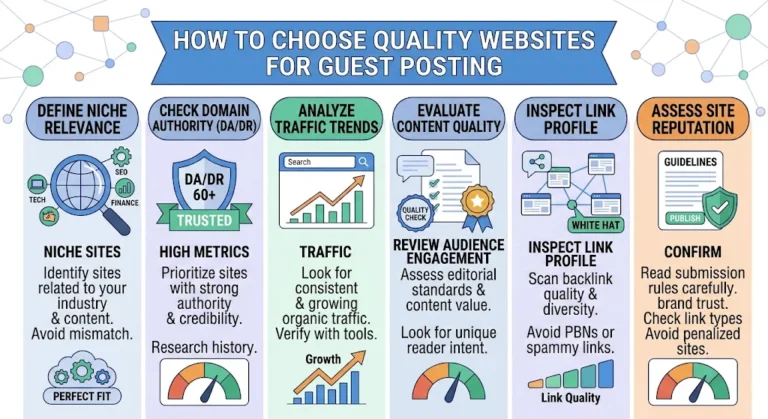
Important Factors to Consider Before Choosing a Strategy
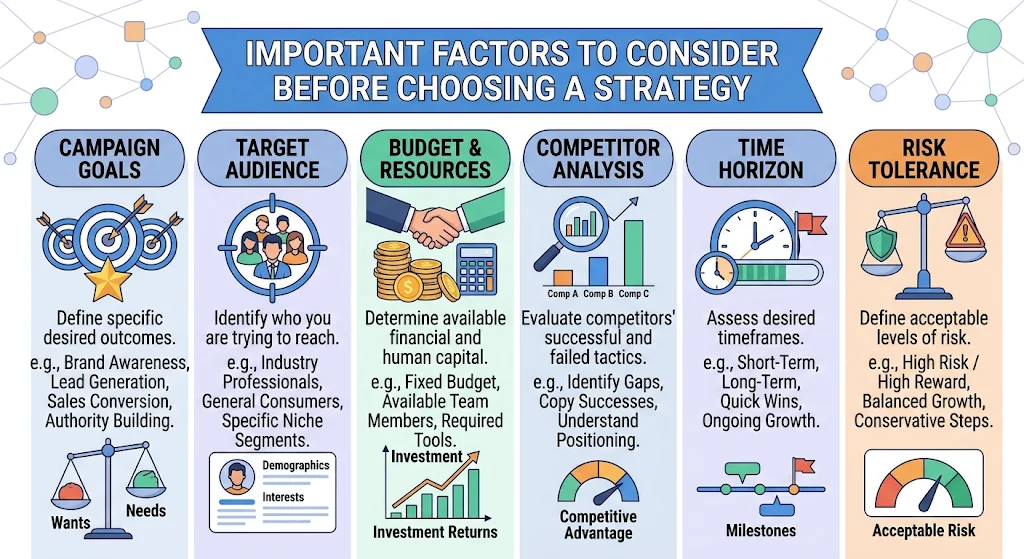
Before investing in either approach, evaluate the following factors.
1. Website Relevance
The publishing website should be related to your industry or target audience.
For example, a link building agency should prioritize relevant SEO, marketing, business, and technology publications.
2. Content Quality
Review the quality of the existing articles and editorial standards.
A website should provide useful information rather than publish content primarily to sell backlinks.
3. Organic Search Visibility
Check whether the website has meaningful organic search visibility.
SEO platforms can provide estimated traffic and keyword information, but these estimates are not exact.
4. Backlink Profile
Evaluate the website’s existing backlinks and look for suspicious linking patterns or excessive unrelated commercial references.
5. Editorial Standards
Understand how the publisher handles article submissions, external references, sponsored content, and link attributes.
6. Marketing Objectives
Think about what your business wants to achieve.
If your primary goal is brand exposure and thought leadership, guest posting may be a better fit.
If you have a genuinely useful resource that could improve an existing article, a niche edit may be worth exploring.
Are Guest Posting and Niche Edits Safe for SEO?
Guest posting and niche edits are not inherently safe or unsafe. Their SEO implications depend on how they are implemented.
Google’s spam policies address manipulative link practices, including paid links intended to influence search rankings.
For example, buying or selling links for ranking purposes, excessive link exchanges, and large-scale guest posting campaigns that use keyword-rich anchor text can violate search engine guidelines.
To maintain a responsible approach:
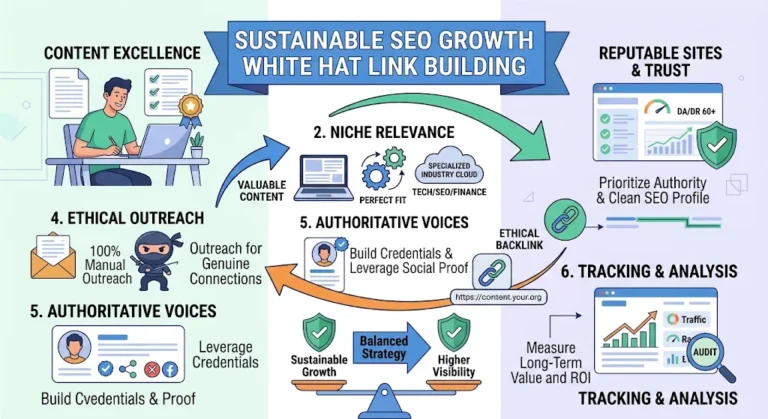
- Prioritize editorial relevance.
- Publish genuinely useful content.
- Avoid manipulative link schemes.
- Use natural and descriptive anchor text.
- Properly qualify sponsored or paid links.
- Follow publisher disclosure policies.
- Avoid websites created primarily to sell backlinks.
For paid placements, appropriate attributes such as rel="sponsored" or rel="nofollow" should be used as applicable.
The goal should be to create useful publishing opportunities rather than manipulate search engine rankings.
Can You Use Guest Posting and Niche Edits Together?
Yes. Businesses can include both approaches in a broader content marketing and digital PR strategy.
For example, an SEO agency may use guest posting to publish original educational articles on relevant websites while identifying existing articles that could benefit from additional useful resources.
A balanced approach may help businesses:
- Reach different relevant audiences.
- Develop publisher relationships.
- Share original expertise.
- Promote useful resources.
- Build brand recognition.
- Create additional referral traffic opportunities.
However, using more than one strategy does not automatically produce better SEO results.
Every publishing opportunity should be evaluated independently based on relevance, quality, and editorial value.
How to Choose a Professional Link Building Agency
Managing guest posting and niche edit campaigns requires website research, publisher communication, content evaluation, and ongoing monitoring.
For businesses that do not have an internal SEO team, working with a professional link building agency can simplify campaign management.
Before selecting a provider, consider the following:
Publisher quality: Ask how the agency evaluates websites and selects publishing opportunities.
Content standards: Review whether the agency creates original and informative articles.
Transparency: Make sure you receive clear information about publication websites and completed placements.
Link policies: Ask how sponsored links and paid placements are disclosed and qualified.
Reporting: Check whether the provider offers publication URLs, link verification, and campaign reports.
Realistic expectations: Avoid providers promising guaranteed Google rankings or instant SEO results.
A reliable agency should focus on quality, relevance, transparency, and long-term marketing value.
Final Thoughts
Guest posting and niche edits are two different approaches to content-based link building.
Guest posting offers opportunities to create original content, introduce your brand to new audiences, and develop professional relationships with publishers.
Niche edits provide opportunities to add relevant references to existing articles when those references improve the reader’s experience.
Neither strategy guarantees higher search rankings. Their value depends on the quality of the publishing website, content relevance, editorial standards, and compliance with search engine guidelines.
For businesses looking to strengthen their online presence, the best approach is to prioritize genuine editorial opportunities rather than focusing only on backlink quantity.
At Authority Link Media, we focus on quality-driven guest posting and responsible link building solutions designed around business goals.
Explore our guest posting and link building services to discover suitable publishing opportunities for your website.