White Hat Link Building Strategies for Sustainable SEO Growth
Building a strong online presence requires more than publishing content and optimizing website pages. Businesses also need to establish credibility, attract relevant audiences, and develop meaningful connections with other websites. This is where link building becomes an important part of search engine optimization (SEO).
However, not all link building methods are equally effective or sustainable. Some techniques focus on manipulating search engine rankings through artificial links, while others prioritize valuable content, genuine relationships, and natural editorial references.
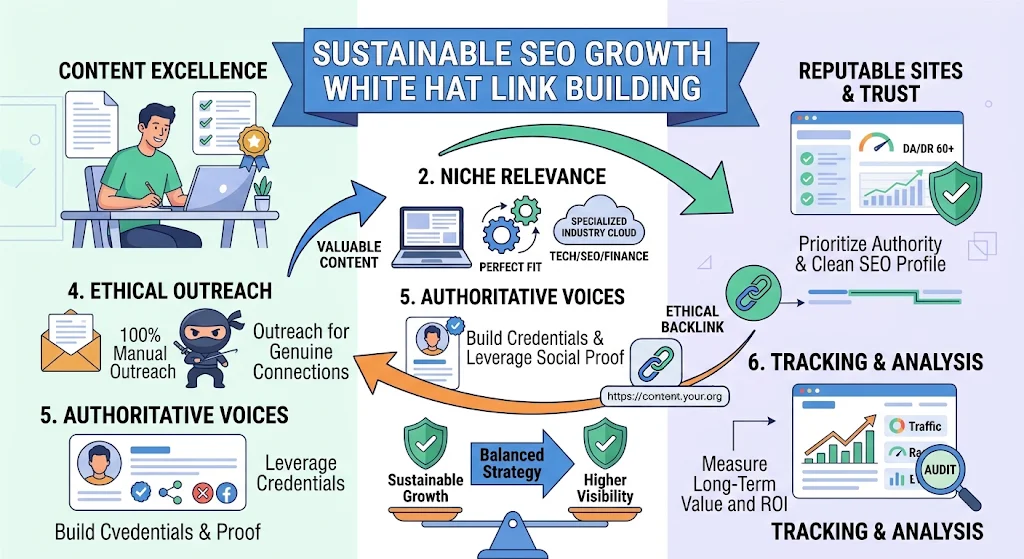
White hat link building follows ethical SEO practices and focuses on earning relevant backlinks through legitimate methods. Instead of trying to manipulate search engine algorithms, it aims to provide genuine value to readers, publishers, and website owners.
For businesses that want to build long-term organic visibility, white hat link building offers a more sustainable approach.
In this guide, we will explore what white hat link building means, why it matters, and which strategies businesses can use to earn quality backlinks while following search engine guidelines.
What Is White Hat Link Building?
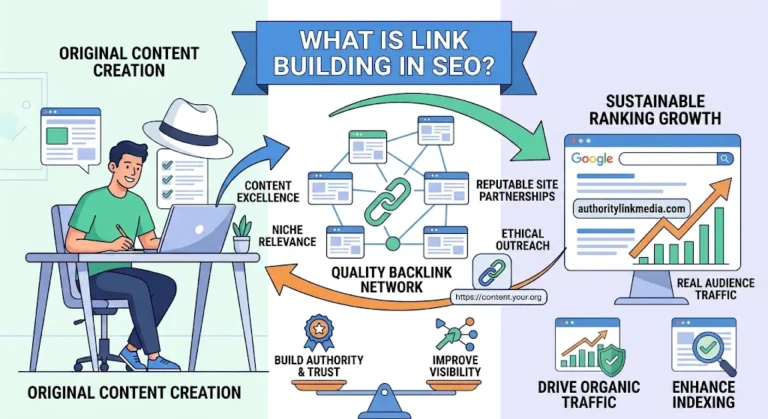
White hat link building refers to acquiring backlinks through ethical and search engine-friendly practices.
It involves creating useful content, building professional relationships, contributing valuable articles, and earning genuine editorial references from relevant websites.
For example, imagine you publish a detailed guide about digital marketing. A respected marketing website discovers your resource and references it in one of its articles because it provides useful information to its readers.
This is an example of a naturally earned editorial backlink.
White hat link building focuses on:
- Creating original and informative content.
- Earning relevant editorial backlinks.
- Building relationships with publishers.
- Contributing useful guest articles.
- Providing genuine value to online audiences.
- Following applicable search engine guidelines.
The primary goal is not simply to increase the number of backlinks. It is to develop a trustworthy online presence through meaningful website connections.
Why Is White Hat Link Building Important for SEO?
White hat link building supports several important aspects of a website’s long-term SEO strategy.
1. Builds Website Credibility
When reputable websites reference your content, it can help establish your brand as a useful resource within your industry.
For example, an SEO agency receiving editorial references from relevant marketing publications may gain greater visibility among its target audience.
These references can strengthen brand recognition and help establish professional credibility.
2. Supports Organic Search Visibility
Backlinks are among the signals used by search engines when evaluating webpages.
Relevant editorial links can help search engines understand relationships between websites and discover useful content.
However, backlinks alone do not guarantee improved rankings. Search engines consider numerous other factors, including content relevance, page quality, search intent, and technical performance.
3. Generates Relevant Referral Traffic
A useful backlink can introduce your website to visitors who are already interested in your industry.
For example, a business owner reading an article about SEO strategies might click a relevant link to explore your digital marketing services.
These visitors may become potential customers if your website offers solutions that match their needs.
4. Strengthens Brand Awareness
Publishing helpful content on respected websites can expose your business to new audiences.
Over time, consistent contributions to relevant publications can help people become more familiar with your brand and expertise.
5. Creates Long-Term Marketing Opportunities
White hat link building encourages genuine relationships with website owners, bloggers, journalists, and industry professionals.
These connections can create opportunities for future collaborations, content partnerships, interviews, and editorial mentions.
7 Effective White Hat Link Building Strategies
Developing a sustainable backlink profile requires planning, consistency, and a focus on quality.
Here are seven effective strategies businesses can use to earn relevant backlinks.
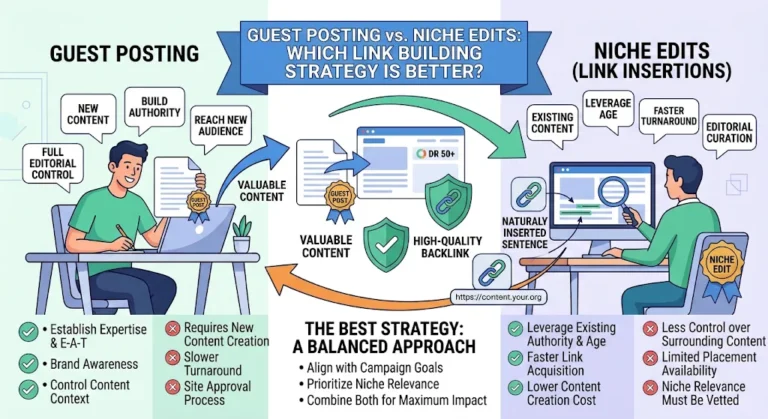
1. Guest Posting on Relevant Websites
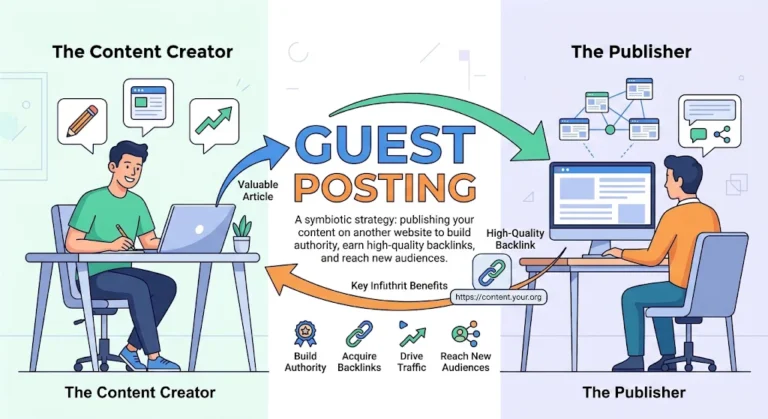
Guest posting is one of the most recognized content marketing methods used in link building.
It involves contributing original articles to relevant third-party websites. These articles provide useful information to the publisher’s audience while introducing your brand to new readers.
For example, a digital marketing agency could contribute an educational article about SEO strategies to a business or marketing publication.
To make guest posting more effective:
- Identify websites related to your industry.
- Research their audience and editorial standards.
- Suggest relevant article topics.
- Create original, informative content.
- Follow the publisher’s linking and disclosure requirements.
Guest posting should focus on editorial value and audience relevance rather than publishing large numbers of articles solely to obtain backlinks.
Paid guest placements should be appropriately disclosed and qualified according to search engine guidelines.
2. Create High-Quality, Link-Worthy Content
One of the best ways to earn natural backlinks is to publish resources that other websites genuinely want to reference.
Useful content gives publishers a reason to link to your website because it helps their readers understand a particular subject.
Consider creating:
- Comprehensive industry guides.
- Original research and statistics.
- Educational blog posts.
- Free templates and downloadable resources.
- Practical tutorials.
- Expert interviews.
- Case studies based on genuine results.
For example, an SEO agency could publish a detailed guide explaining how businesses can evaluate backlink quality.
Other marketing websites may reference that guide when discussing SEO best practices.
The more useful and original your content is, the more opportunities it may create for natural editorial references.
3. Use Digital PR for Editorial Backlinks
Digital PR combines public relations and content marketing to earn online exposure and editorial mentions.
It involves sharing newsworthy information, original research, expert opinions, and useful resources with relevant publications.
For example, a company might publish an industry report containing original data about digital marketing trends.
Journalists and bloggers covering the same subject may find the research useful and reference it in their articles.
Effective digital PR activities include:
- Creating original industry research.
- Sharing expert commentary.
- Publishing newsworthy company updates.
- Offering useful insights to journalists.
- Building relationships with relevant publications.
Digital PR can support brand awareness, referral traffic, and natural backlink acquisition.
4. Build Relationships with Industry Bloggers
Professional relationships can create valuable opportunities for content collaboration and natural editorial mentions.
Instead of contacting hundreds of websites with generic backlink requests, focus on connecting with publishers and professionals who work within your industry.
You can build relationships by:
- Engaging with relevant industry articles.
- Sharing useful resources.
- Participating in professional discussions.
- Offering expert insights.
- Collaborating on educational content.
- Communicating with publishers professionally.
Genuine relationships often provide more meaningful opportunities than automated outreach campaigns.
5. Find Relevant Resource Page Opportunities
Many websites maintain resource pages that organize useful guides, tools, research, and educational materials for their audiences.
These pages can provide opportunities to earn relevant editorial references.
Start by identifying websites that publish resource collections related to your niche.
Then review whether your content offers something useful that would improve the existing resource page.
For example, a digital marketing website might maintain a list of helpful SEO learning resources.
If you have published an original and comprehensive SEO guide, you can introduce it to the website owner as a potential addition.
The most important requirement is relevance. Your resource should genuinely benefit the publisher’s readers.
6. Analyze Competitor Backlink Profiles
Competitor backlink analysis helps identify potential publishing opportunities and understand how other websites attract relevant links.
SEO tools such as Ahrefs and Semrush allow marketers to examine referring domains, backlink sources, and competitor link profiles.
When analyzing competitors, consider:
- Which industry websites reference them?
- What type of content attracts backlinks?
- Are they receiving editorial mentions?
- Which relevant publications accept expert contributions?
- What content opportunities are missing from your own website?
Do not copy every backlink a competitor has acquired. Evaluate each opportunity independently and prioritize quality, relevance, and genuine editorial value.
7. Create Helpful Free Resources
Free resources can attract attention and encourage other websites to reference your content.
Businesses can develop practical tools and materials that solve specific problems for their target audiences.
Examples include:
- SEO checklists.
- Website audit templates.
- Content planning worksheets.
- Keyword research guides.
- Backlink evaluation spreadsheets.
- Marketing calculators.
For example, an SEO agency could create a free backlink quality checklist that helps website owners evaluate potential publishing opportunities.
If the resource is useful and easy to access, other bloggers and marketers may naturally reference it.
White Hat vs. Black Hat Link Building
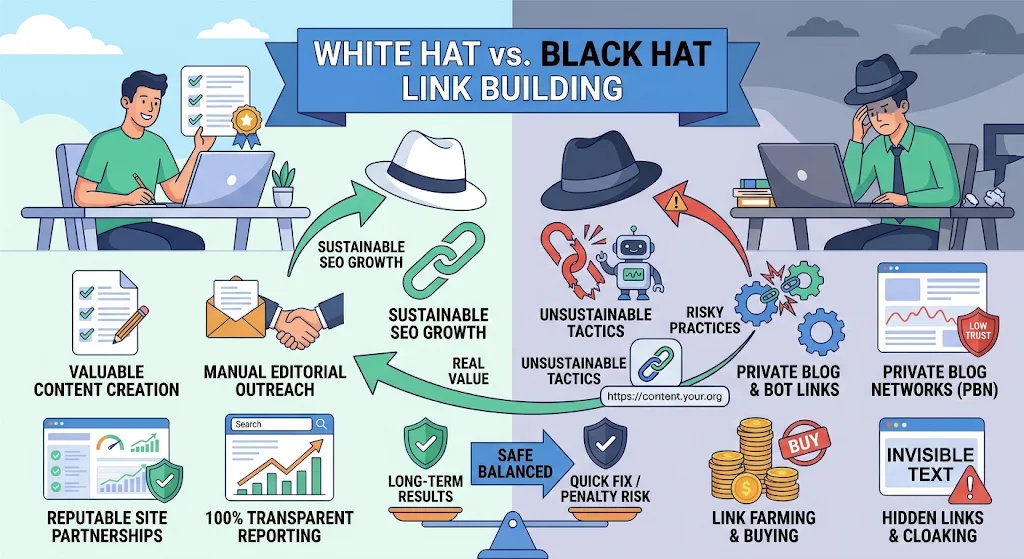
Understanding the difference between white hat and black hat link building is important before starting an SEO campaign.
White hat techniques prioritize useful content, genuine editorial value, and legitimate website relationships.
Black hat techniques attempt to manipulate search rankings through deceptive or manipulative practices.
Here is a simple comparison:
| White Hat Link Building | Black Hat Link Building |
|---|---|
| Natural editorial backlinks | Artificial link schemes |
| High-quality guest content | Mass-produced guest posts |
| Relevant website relationships | Manipulative link networks |
| Original and useful resources | Low-value duplicate content |
| Transparent practices | Deceptive SEO tactics |
| Long-term content strategy | Short-term ranking manipulation |
Examples of practices that may violate Google’s spam policies include paid links intended to manipulate rankings, excessive link exchanges, automated link creation, and links generated through private blog networks.
Choosing ethical methods helps businesses avoid relying on manipulative tactics and build a stronger long-term marketing foundation.
How to Identify High-Quality Backlink Opportunities
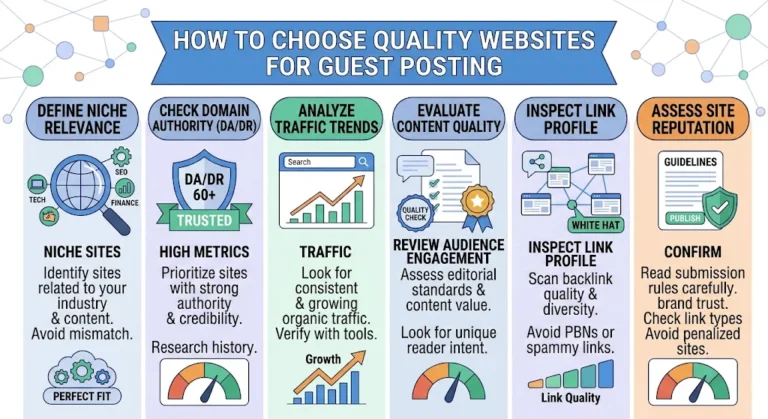
Before pursuing a backlink opportunity, it is important to evaluate the website carefully.
A high-quality opportunity should provide genuine value to your business and its target audience.
Consider the following factors:
Website Relevance
Check whether the website publishes content related to your industry.
For example, a marketing agency should generally prioritize marketing, business, technology, and entrepreneurship publications over unrelated websites.
Content Quality
Review the articles published on the website.
Look for original information, helpful explanations, professional writing, and consistent editorial standards.
Organic Search Visibility
Check whether the website receives organic search traffic and has a meaningful online presence.
Tools such as Ahrefs and Semrush can provide estimated traffic information, but their figures are not exact.
Backlink Profile
Review the website’s referring domains and existing backlinks.
Look for suspicious patterns, irrelevant links, and signs of manipulative publishing practices.
Editorial Standards
A trustworthy publisher should maintain reasonable content standards and provide useful information to its readers.
Do not evaluate a website using only Domain Authority, Domain Rating, or another third-party SEO score. These metrics are useful for comparison but do not represent Google’s official assessment of website quality.
Read More: What Is Link Building in SEO? A Complete Guide for Beginners
Common White Hat Link Building Mistakes to Avoid
Even ethical link building campaigns can become ineffective when businesses make poor decisions.
Here are some common mistakes to avoid.
Focusing only on backlink quantity: Acquiring many irrelevant links does not necessarily improve SEO performance.
Ignoring niche relevance: A website’s topic and audience should be relevant to your business objectives.
Publishing promotional guest articles: Guest content should educate and inform readers rather than function as a sales advertisement.
Using unnatural anchor text: Repeatedly inserting exact-match commercial keywords can create unnatural backlink patterns.
Ignoring website quality: A high authority metric does not automatically make a publisher trustworthy.
Expecting immediate rankings: SEO performance takes time, and no backlink strategy can guarantee a specific ranking position.
Using manipulative paid link schemes: Paid links intended to pass ranking credit can violate search engine spam policies.
Avoiding these mistakes helps businesses develop a more responsible and sustainable SEO strategy.
How to Measure White Hat Link Building Performance
Measuring your link building campaign helps you understand whether your efforts are supporting your business objectives.
Here are several useful performance indicators.
Referring Domains
Monitor the number of unique websites linking to your website.
Evaluate whether new referring domains are relevant and provide genuine editorial value.
Organic Search Traffic
Use Google Search Console and Google Analytics to monitor organic search performance and website visits.
Look for meaningful changes over time rather than assuming every improvement comes from backlinks.
Referral Traffic
Track visitors arriving through external websites.
This helps identify which publishing opportunities attract interested readers.
Keyword Performance
Monitor relevant keyword impressions, clicks, and search positions through Google Search Console.
Remember that keyword performance is influenced by multiple SEO factors.
Brand Mentions
Track how frequently your business is mentioned across relevant websites and publications.
Brand mentions can help you understand how your online presence is developing.
Should You Hire a White Hat Link Building Agency?
Managing an effective link building campaign requires research, content development, outreach, publisher evaluation, and performance monitoring.
For businesses without an experienced internal SEO team, working with a professional agency can simplify the process.
A reliable agency can help with:
- Identifying relevant publishing websites.
- Evaluating backlink opportunities.
- Developing guest posting strategies.
- Creating original SEO content.
- Managing publisher outreach.
- Coordinating content publication.
- Monitoring published backlinks.
- Providing transparent campaign reports.
Before selecting an agency, review its previous work, publisher selection process, content quality, and approach to search engine guidelines.
Be cautious of providers that promise guaranteed rankings, thousands of backlinks within a short period, or unrealistic SEO results.
A professional provider should prioritize transparency, quality, relevance, and sustainable link acquisition.
Final Thoughts
White hat link building is an important part of a responsible and sustainable SEO strategy.
By creating useful content, publishing relevant guest articles, building professional relationships, and earning genuine editorial references, businesses can strengthen their online presence and reach new audiences.
The most effective link building strategy is not about acquiring the highest number of backlinks. It is about earning relevant links that provide real value to readers and support your broader digital marketing goals.
At Authority Link Media, we believe in quality-focused guest posting and ethical link building practices that help businesses develop meaningful online visibility.
Explore our guest posting and link building services to discover opportunities to strengthen your website’s backlink profile and support your long-term SEO objectives.