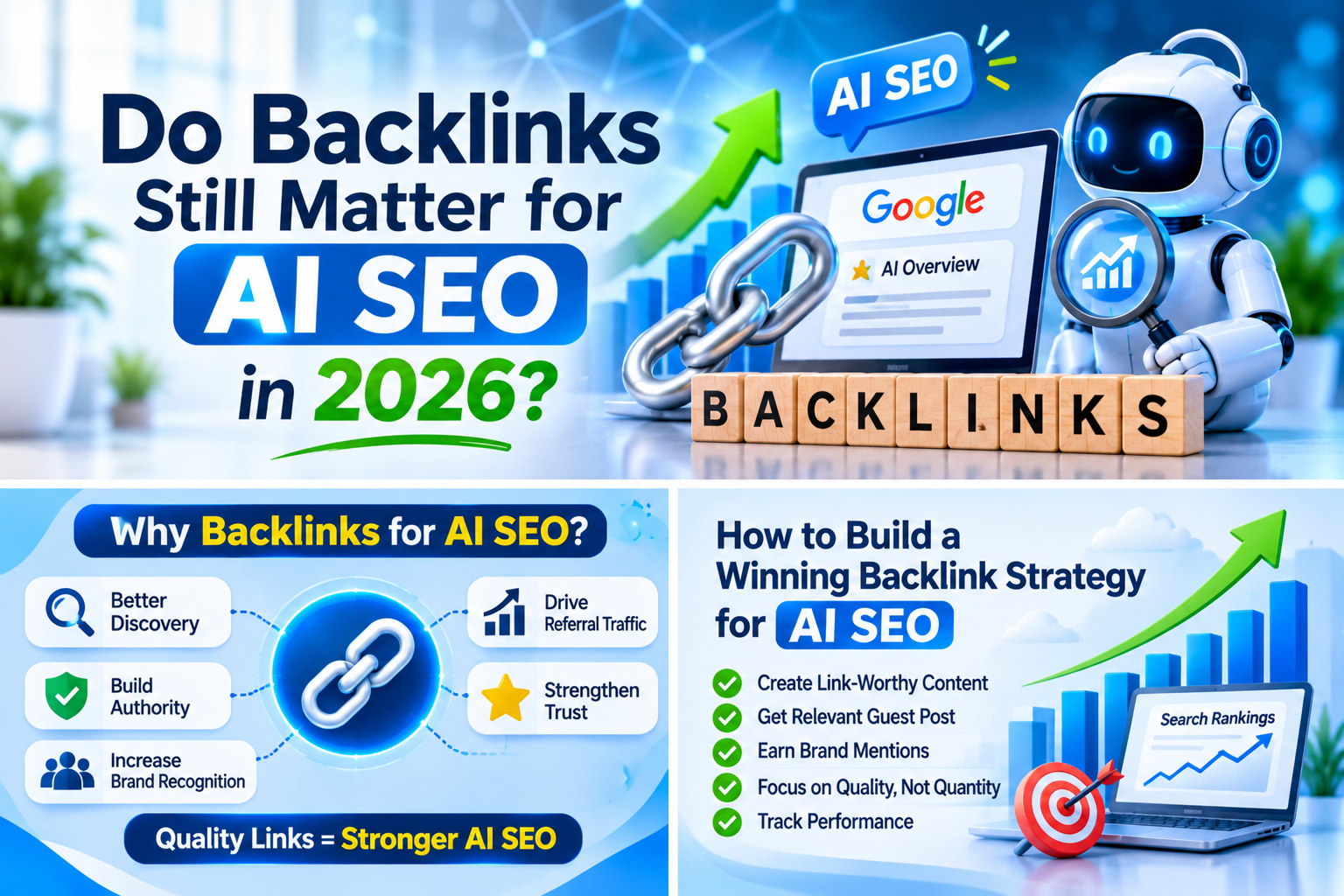
Do Backlinks Still Matter for AI SEO in 2026?
Introduction
Search is changing. People no longer rely exclusively on traditional search engine results to discover information, compare services, or find businesses. They increasingly use AI-powered search experiences such as Google AI Overviews, ChatGPT Search, Gemini, and Perplexity to research topics and identify useful sources.
This shift has created an important question for website owners and digital marketers: do backlinks still matter in an environment where AI systems generate answers instead of simply displaying a list of websites?
The short answer is yes, but their role needs to be understood differently.
Backlinks remain valuable because they can help search engines discover content, understand relationships between websites, and evaluate the wider reputation of a domain. However, having thousands of backlinks does not automatically make a website a trusted source for AI-generated answers.
In 2026, successful link building requires more than increasing backlink counts. Businesses need relevant links, credible brand mentions, useful content, and a consistent online presence.
Let’s explore how backlinks fit into modern AI SEO and what website owners should prioritize.
1. How AI Search Has Changed the Value of Backlinks
Traditional search engines typically present users with a list of pages that may answer their queries. Users then visit those pages to find the information they need.
AI-powered search works differently. It can retrieve information from multiple sources, identify relevant details, and generate a combined response. Depending on the platform and query, it may also provide links to the websites used as supporting sources.
This changes how businesses should think about online authority.
A backlink from a relevant industry website can introduce a brand to new audiences and provide a pathway for search engines to discover its content. It can also contribute to the wider reputation of the website receiving the link.
For AI search visibility, however, a link alone is not enough. The destination page must contain useful information that directly addresses a question or topic.
Consider two websites:
- Website A has hundreds of backlinks from unrelated directories and low-quality websites.
- Website B has fewer backlinks, but receives relevant references from respected industry publications and publishes original, useful information.
Website B may have a stronger foundation for building topical credibility, even though it has fewer links.
The important lesson is that backlink quality and context matter more than simply accumulating links.
2. Why Backlinks for AI SEO Still Matter
Backlinks are not a guaranteed way to secure AI citations. Nevertheless, they can support several important parts of a website’s search visibility strategy.
A. Improving Website Discovery
Search engines use links to discover pages and understand how different parts of the web connect.
When an established website links to a useful resource, that link may help search engines find the destination page. Internal links also help search engines understand the structure of a website.
For AI-related search experiences that rely on information retrieved from search indexes, discoverability remains important.
A website that cannot be crawled or indexed properly has a fundamental visibility problem, regardless of how many backlinks it has acquired.
B. Building Industry-Relevant Authority
A link from a website that regularly publishes content about your industry can provide meaningful context.
For example, a digital marketing agency receiving a contextual backlink from an established SEO publication has a more relevant connection than receiving a link from an unrelated website about home decoration.
Relevant links help create a more coherent picture of what a business does and which subjects it covers.
This is especially useful for companies that want to establish expertise within a specific industry.
C. Supporting Brand Recognition
Backlinks can introduce your business to readers who might never have discovered it through Google.
When people repeatedly encounter your brand across relevant publications, industry resources, and expert discussions, they have more opportunities to recognize and remember your business.
Brand recognition is particularly important in competitive markets where customers compare multiple providers before making a decision.
D. Creating Referral Traffic Opportunities
A good backlink can generate value even when it does not directly improve search rankings.
Readers may click a relevant link, explore your website, read your services, and eventually contact your business.
For a service provider, a contextual placement on a website that attracts the right audience can be more valuable than a large number of links that generate no relevant visitors.
3. What Recent Research Suggests About Backlinks and AI Visibility
Although backlinks are widely discussed in AI SEO, it is important to distinguish between correlation and proven causation.
A 2025 Semrush study examined 1,000 domains and compared backlink-related metrics with visibility across several AI platforms, including ChatGPT, Gemini, Google AI Overviews, and Perplexity.
The research found positive relationships between stronger backlink authority and AI visibility. It also suggested that backlink quality and authority were more meaningful than raw backlink volume.
However, this was observational research. It did not prove that acquiring a particular backlink would directly cause an AI platform to mention a website.
Other research has also highlighted the importance of brand mentions. An Ahrefs study discussed in Search Engine Land in November 2026 reported that branded web mentions had a stronger correlation with Google AI Overview mentions than raw backlink counts in its dataset.
These findings point toward a broader approach to authority building.
Businesses should not focus exclusively on acquiring links. They should also work toward becoming recognized, referenced, and useful sources within their industries.
The practical takeaway is straightforward: backlinks matter, but they are only one part of a larger visibility picture.
4. Backlink Quality vs. Backlink Quantity in AI SEO
One of the biggest mistakes in traditional link-building campaigns is treating every backlink as equally valuable.
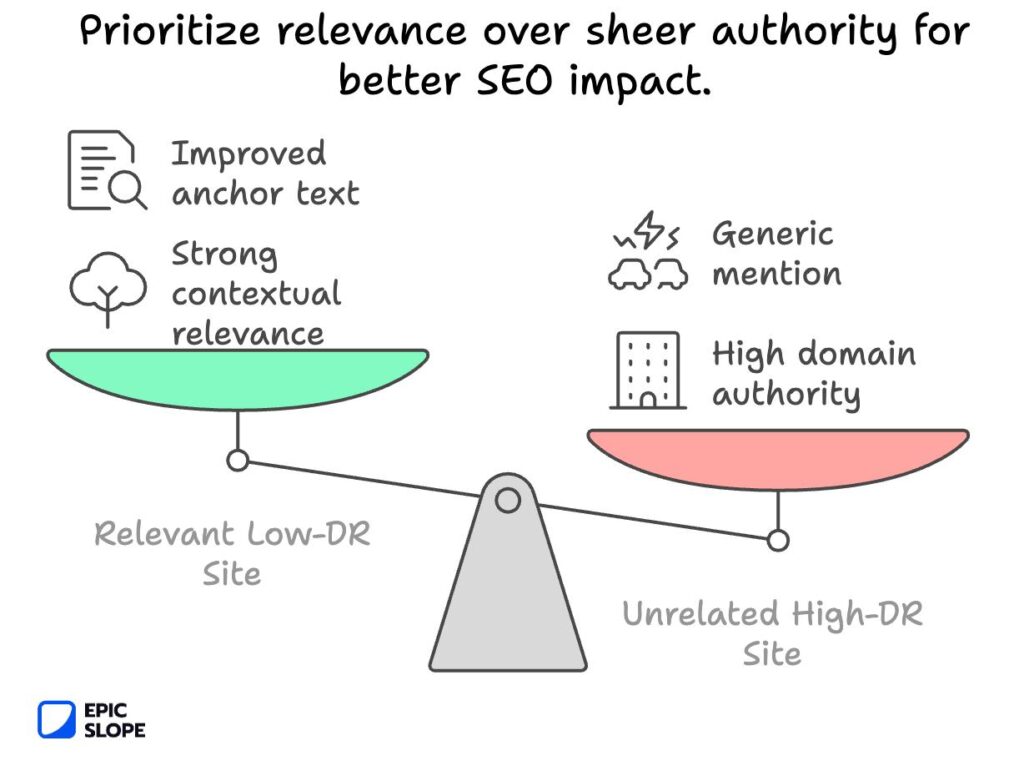
A backlink profile with a large number of links may look impressive in a reporting dashboard. However, the number alone does not explain whether those links are relevant, editorially meaningful, or capable of attracting an interested audience.
For AI SEO, a quality-focused approach is more sustainable.
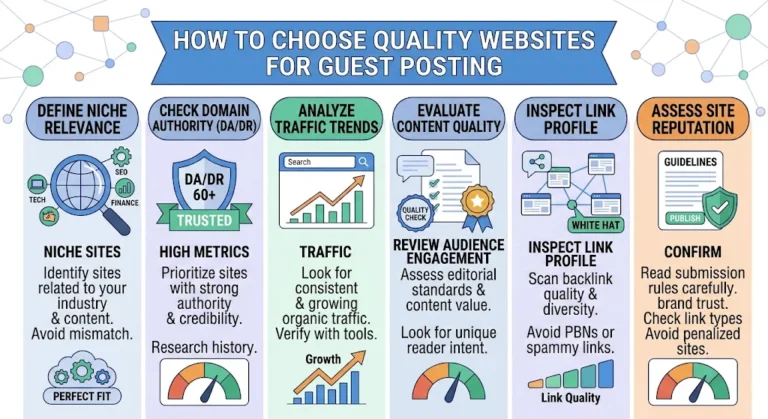
Here are some characteristics worth evaluating before pursuing a backlink:
Topical Relevance
The linking website should have a reasonable connection to your industry, audience, or subject.
A backlink from a marketing publication may be relevant to an SEO agency. A link from an unrelated website with no meaningful connection may provide much less strategic value.
Editorial Context
Links placed naturally within useful articles can help readers understand why a resource is being recommended.
For example, an article explaining technical SEO could naturally reference a relevant guide about website audits.
The link should contribute to the discussion rather than exist solely to manipulate rankings.
Website Credibility
Review the publication’s content quality, editorial standards, audience, and general reputation.
Do not rely exclusively on third-party metrics such as Domain Rating or Domain Authority. These are useful comparison tools, but they are not direct measurements of Google’s internal ranking systems or AI citation decisions.
Real Audience and Engagement
A publication that attracts relevant readers may offer valuable exposure beyond the backlink itself.
Consider whether the website publishes regularly, covers meaningful topics, and appears to serve an identifiable audience.
Natural Placement
A backlink should make sense in the context of the article.
Links inserted into unrelated paragraphs, keyword-stuffed pages, or thin content created mainly for link placement are not good long-term investments.
5. Do Guest Posts Help Improve AI Search Visibility?
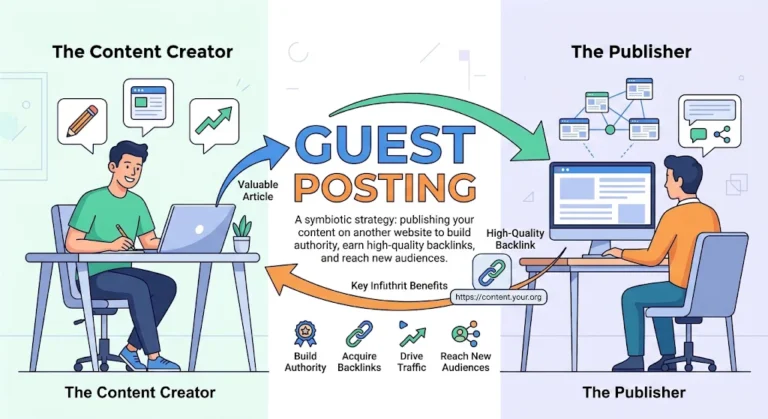
Guest posting can contribute to an AI SEO strategy when it is approached as a genuine publishing and authority-building activity.
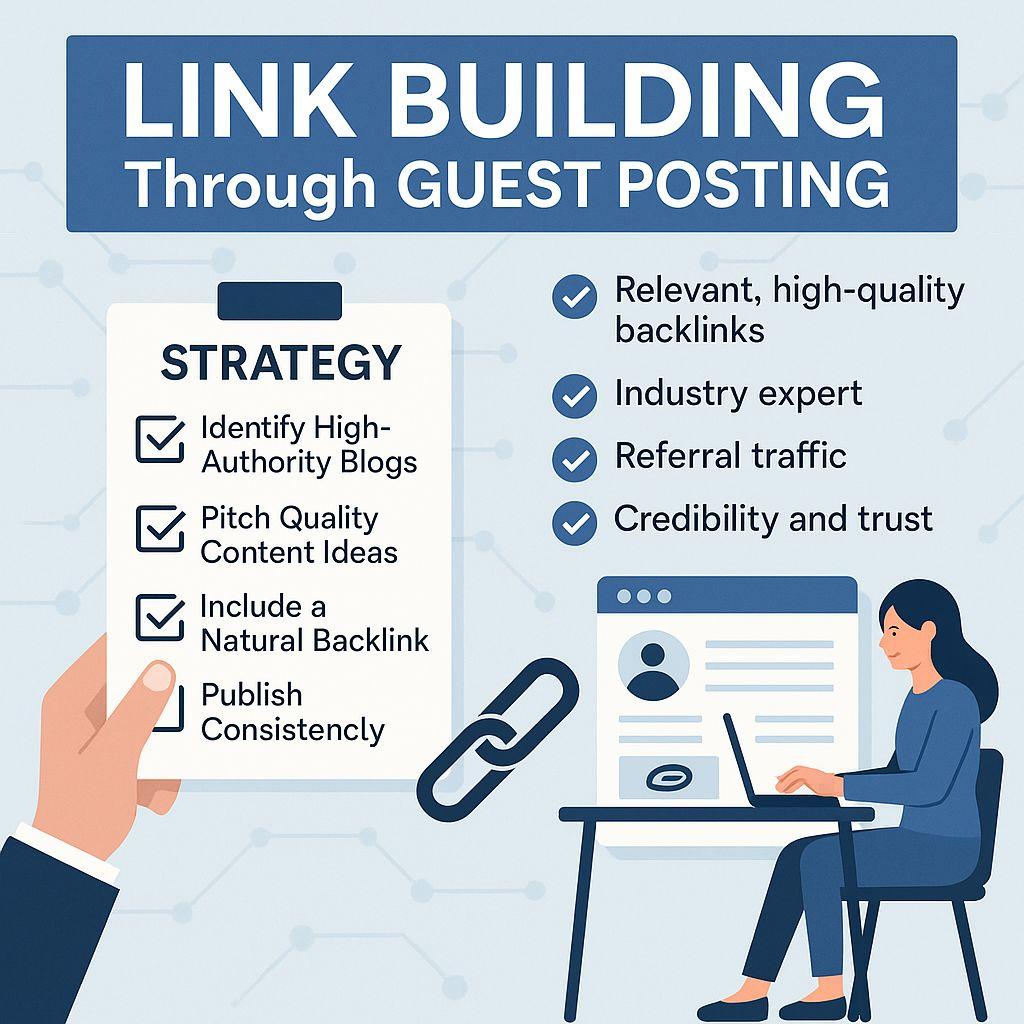
A well-researched guest article allows a business to share useful knowledge with an audience beyond its own website. It can also create opportunities for relevant editorial links and brand recognition.
For example, a digital marketing agency could contribute articles to publications covering:
- Search engine optimization
- Content marketing
- Digital public relations
- Small business growth
- Website development
- Online brand management
Rather than publishing the same promotional article across multiple websites, businesses should create contributions that match each publication’s audience.
A useful guest post should offer something readers can apply. It might explain a common industry problem, compare different approaches, share practical recommendations, or provide original insights.
When a publication includes a contextual link to the agency’s website, that link should support the article and give readers a logical next step.
What Makes a Guest Post Valuable?
A strong guest-post placement generally includes:
- A publication with relevant subject coverage.
- Original content written for its intended audience.
- A natural and useful contextual link, where editorially appropriate.
- Accurate information and meaningful supporting details.
- A publication process that respects the website’s editorial standards.
Guest posting should not be treated as a guaranteed method of getting a business cited by ChatGPT or Google AI Overviews. Instead, it is one way to develop useful industry relationships, reach relevant audiences, and strengthen a brand’s wider online presence.
6. Why Brand Mentions Matter Alongside Backlinks
Not every valuable online reference includes a clickable hyperlink.
A publication might mention a company’s name, describe its services, quote one of its experts, or reference a useful resource without linking directly to the website.
These are commonly called unlinked brand mentions.
Although an unlinked mention does not pass link equity in the same way as a traditional hyperlink, it can still create brand exposure and contribute to a company’s broader online footprint.
For example, imagine an SEO agency is mentioned in several respected digital marketing publications. Some articles link to its website, while others simply discuss its work or expertise.
Together, these references may help more people become familiar with the brand.
Businesses can develop this type of visibility through:
- Digital PR campaigns
- Expert commentary and interviews
- Original industry research
- Useful resources and reports
- Relevant podcast appearances
- Genuine contributions to industry publications
The goal should be to earn recognition through useful contributions rather than generate artificial mentions.
7. How to Build an AI-Focused Backlink Strategy in 2026
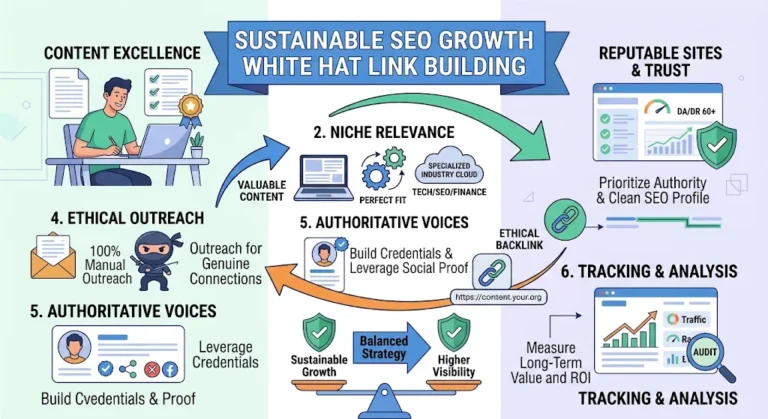
An effective backlink strategy should connect link acquisition with content quality, brand development, and audience relevance.
Here is a practical framework businesses can follow.
Step 1: Identify Your Core Industry Topics
Start by identifying the subjects most closely related to your products or services.
For an SEO agency, these might include:
- Technical SEO
- Link building
- Guest posting
- Content marketing
- Local SEO
- Digital PR
- AI search optimization
These topics provide a foundation for identifying relevant publications and creating useful resources.
Step 2: Create Link-Worthy Resources
Before reaching out to other websites, make sure your own website offers something worth referencing.
Examples include:
- Detailed industry guides
- Original research and surveys
- Practical checklists
- Expert interviews
- Case studies with verifiable results
- Useful templates and tools
A genuinely useful resource gives editors and writers a reason to reference your website.
Step 3: Find Relevant Publishing Opportunities
Research websites that publish content related to your industry.
Evaluate their subject relevance, editorial quality, audience, and publishing standards before contacting them.
Avoid selecting websites solely because they advertise high authority metrics or promise a large number of backlinks.
Step 4: Pitch Original and Relevant Content
Your outreach should explain why your proposed article would be useful to the publication’s readers.
A personalized pitch is generally more meaningful than sending the same generic message to hundreds of website owners.
Suggest topics that match the publication’s existing coverage while offering a fresh perspective.
Step 5: Build a Balanced Link Profile
Do not depend on one publishing method.
A sustainable approach may combine editorial guest contributions, relevant resource-page links, digital PR, genuine partnerships, and naturally earned references.
The objective is to develop a credible online presence rather than manufacture a specific backlink ratio.
Step 6: Monitor Quality and Performance
Track the progress of your link-building activity using relevant SEO tools.
Review:
- New referring domains
- Linking page relevance
- Link placement and destination
- Referral traffic
- Organic search performance
- Brand mentions
- Qualified leads and conversions
You should also review whether acquired links remain live and whether the pages linking to your website continue to provide useful context.
8. Backlink Practices That Businesses Should Avoid
The growing interest in AI SEO has also created opportunities for low-quality link-selling services and unrealistic marketing promises.
Businesses should be cautious about strategies such as:
Buying large quantities of low-quality backlinks: A high backlink count does not guarantee authority or AI visibility.
Using irrelevant guest-post websites: A publication should make sense for the business and its audience.
Publishing duplicate guest articles: Repeating substantially similar content across multiple websites provides little additional editorial value.
Overusing exact-match anchor text: Repeatedly forcing commercial keywords into backlinks can create an unnatural link profile.
Using automated link schemes: Artificial link generation and manipulative link exchanges can violate search engine spam policies.
Chasing metrics instead of relevance: High third-party authority scores do not automatically make a placement valuable.
Google’s spam policies identify link schemes intended to manipulate search rankings as a violation. Businesses should prioritize editorially earned links and avoid tactics designed primarily to influence ranking systems.
9. How to Measure Whether Your Backlink Strategy Is Working
Backlink performance should be evaluated using more than the total number of acquired links.
Start by reviewing your referring domains and the quality of the pages linking to your website. Check whether those links are relevant and whether they generate meaningful referral visits.
Next, monitor organic search performance through Google Search Console. Look at impressions, clicks, queries, and the performance of the pages supported by your link-building activity.
You can also monitor brand mentions and AI search visibility using appropriate third-party monitoring tools. Treat these reports as directional indicators rather than definitive measurements of an AI platform’s internal systems.
Finally, connect marketing activity with business outcomes.
For an agency, a backlink campaign that generates qualified inquiries and introduces the brand to relevant industry audiences may be more valuable than one that only increases a third-party authority score.
10. The Future of Link Building in AI Search
AI-powered discovery is changing how websites compete for attention, but it has not made online reputation or search fundamentals irrelevant.
Businesses still need discoverable websites, useful information, recognizable brands, and credible relationships across the web.
The difference is that link-building strategies should focus less on collecting links and more on earning meaningful recognition.
A backlink from a relevant publication can support discoverability, provide referral opportunities, and strengthen a brand’s online presence. A useful editorial mention can also introduce a business to new audiences, even without a hyperlink.
In the years ahead, the strongest strategies are likely to combine quality content, digital PR, relevant backlinks, expert contributions, and consistent brand communication.
Rather than asking how many backlinks a website needs, businesses should ask a more useful question:
Why would another trusted website want to reference this brand?
Answering that question is a much stronger starting point for sustainable link building.
Conclusion: Backlinks Still Have a Role in AI SEO
So, do backlinks still matter for AI SEO in 2026?
Yes. They remain an important part of a broader SEO and online authority strategy, but they should not be treated as a shortcut to AI citations or guaranteed search rankings.
Relevant editorial links, credible brand mentions, useful guest contributions, and original website content work together to build a stronger online presence.
For businesses investing in long-term search visibility, the priority should be quality rather than volume.
At Authority Link Media, we believe effective link building starts with relevance, useful content, and responsible publishing practices. Our guest posting and link-building approach focuses on helping businesses connect with relevant publications and develop a stronger digital presence.
Looking to strengthen your website’s backlink profile? Explore Authority Link Media’s guest posting and link-building services to discover relevant publishing opportunities for your brand.
Frequently Asked Questions (FAQs)
1. Do backlinks still matter for AI SEO in 2026?
Yes. Backlinks remain relevant to broader search visibility, website discovery, and online authority. However, they do not guarantee that an AI platform will mention or cite a website.
2. Can backlinks help a website appear in ChatGPT search results?
Quality backlinks may contribute to a website’s wider discoverability and reputation. However, there is no confirmed formula that guarantees ChatGPT will cite a website based on its backlink profile.
3. Are guest posts useful for AI SEO?
Guest posts can support brand exposure, referral traffic, and relevant backlink acquisition when they provide original value to the publication’s audience. Their value should not be measured by links alone.
4. Are nofollow backlinks useful for AI SEO?
Nofollow links can still provide referral traffic, brand exposure, and opportunities for people to discover a business. They should not be treated as guaranteed ranking or AI citation signals.
5. What is more important for AI SEO: backlinks or brand mentions?
Both can contribute to a brand’s online presence. Backlinks provide clickable references, while unlinked brand mentions can create awareness and recognition. Neither guarantees AI visibility.
6. How many backlinks does a website need for AI SEO?
There is no universal number. The right approach depends on the website’s competition, industry, existing authority, content quality, and overall marketing goals. Relevant, credible links are more useful than an arbitrary backlink target.
7. Should businesses continue investing in guest posting?
Yes, when guest posting is based on relevant publications, original contributions, and genuine audience value. Businesses should avoid mass-produced placements and websites created primarily to sell links.