What Is Link Building in SEO? A Complete Guide for Beginners
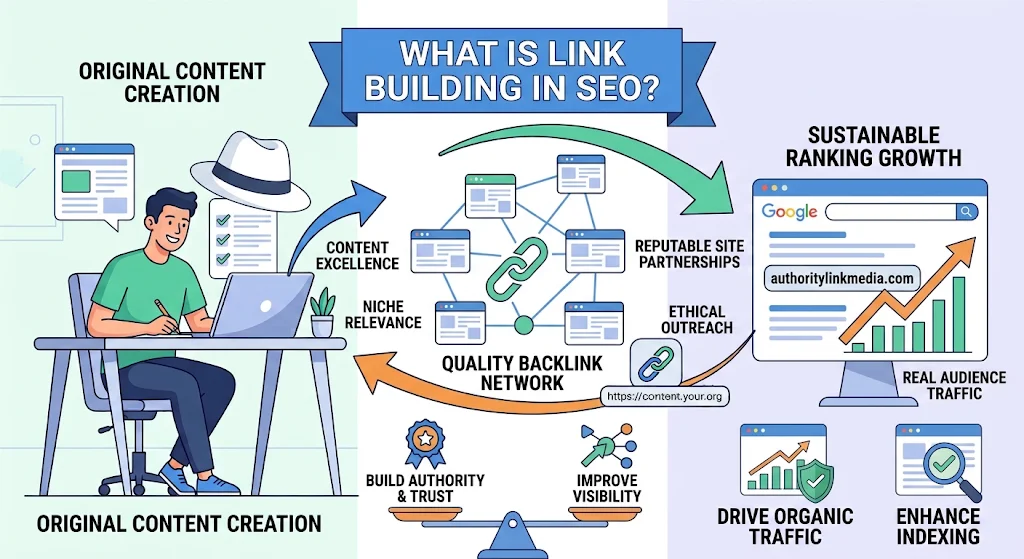
Link building is one of the most important aspects of search engine optimization (SEO). It helps websites build authority, improve online visibility, attract referral traffic, and establish stronger connections within their industry.
In today’s competitive digital landscape, simply publishing content is not always enough to attract consistent organic traffic. Businesses also need to develop a strong online presence and make their websites discoverable through relevant sources.
This is where link building becomes valuable.
Link building involves earning hyperlinks from other websites that point to your website. These links, commonly known as backlinks, can help search engines discover content and understand relationships between websites.
However, successful link building is not about collecting as many backlinks as possible. Quality, relevance, and natural link acquisition are much more important than backlink quantity.
In this complete guide, we will explain what link building is, how it works, why backlinks matter, and which strategies businesses can use to build a sustainable SEO foundation.
What Is Link Building in SEO?
Link building is the process of acquiring hyperlinks from external websites that direct users to your website.
A hyperlink allows visitors to move from one webpage to another. When another website links to your content, it creates a backlink.
For example, imagine you operate a digital marketing agency and publish a detailed article about SEO strategies. Another marketing website finds your guide useful and references it in one of its articles.
That reference creates a backlink to your website.
Search engines use links as one of many signals to discover and understand webpages. Relevant, trustworthy editorial links can also contribute to how search engines evaluate the credibility and importance of content.
A successful link building strategy focuses on earning links through useful content, genuine relationships, and relevant publishing opportunities.
Why Is Link Building Important for SEO?
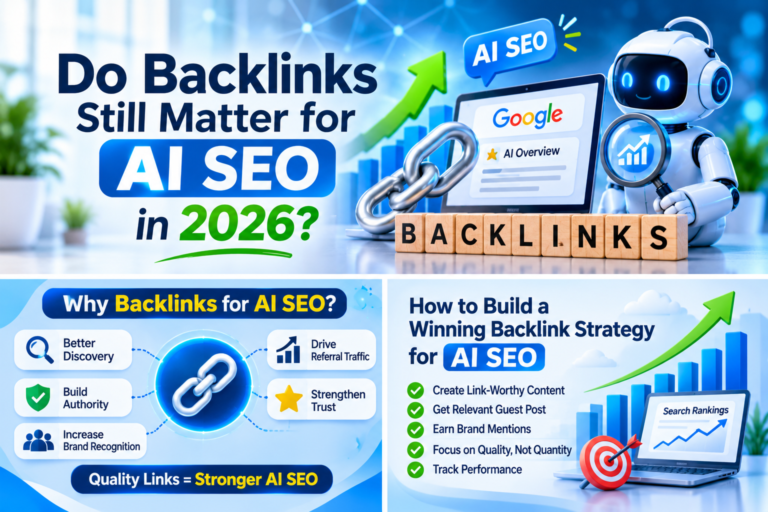
Link building plays an important role in a comprehensive SEO strategy. Although backlinks are not the only factor that influences search rankings, they can provide several benefits when acquired naturally.
1. Helps Search Engines Discover Content
Search engines use automated crawlers to discover webpages and understand how websites are connected.
Links between webpages can help these crawlers find new content and navigate different sections of the internet.
For websites that regularly publish new articles, relevant internal and external links can support content discovery.
2. Builds Website Authority and Credibility
When relevant and reputable websites reference your content, it can help establish your website as a useful resource within your industry.
For example, receiving an editorial reference from a respected marketing publication may strengthen your brand’s reputation among readers.
However, third-party metrics such as Domain Authority (DA) and Domain Rating (DR) are not official Google ranking factors. They are independent metrics used by SEO professionals to compare websites.
3. Supports Organic Search Visibility
Backlinks are among the signals considered by Google’s ranking systems.
Relevant links can help search engines understand connections between websites and content topics.
However, acquiring backlinks does not guarantee higher rankings. Search performance also depends on content quality, search intent, technical SEO, competition, and many other factors.
4. Generates Referral Traffic
A backlink can bring visitors directly from another website.
For example, if a popular business blog references your website in an informative article, interested readers may click the link to learn more.
This type of traffic is called referral traffic.
Unlike visitors who discover your website through search engines, referral visitors arrive through links on other websites.
5. Improves Brand Awareness
Getting mentioned on relevant industry websites introduces your business to new audiences.
Regular exposure through valuable articles, interviews, and editorial references can help more people recognize your brand.
This is particularly useful for startups, digital marketing agencies, online businesses, and companies entering competitive markets.
Read More: AI SEO in 2026
Types of Backlinks in SEO
Understanding different types of backlinks helps businesses develop a more balanced link building strategy.
1. Editorial Backlinks
Editorial backlinks are naturally earned when another website references your content because it provides useful information.
For example, a journalist may link to your original research while writing an article about industry trends.
These links are valuable because they are based on genuine editorial decisions.
2. Guest Post Backlinks
Guest post backlinks appear within articles contributed to other websites.
For example, a digital marketing agency might write an educational article about SEO for a relevant business publication.
However, guest posting should primarily focus on useful content and genuine audience relevance.
Paid or sponsored guest placements should be properly disclosed and qualified according to applicable search engine guidelines. Publishing guest articles primarily to manipulate rankings can violate Google’s spam policies.
3. Resource Page Backlinks
Some websites maintain resource pages containing useful tools, educational materials, guides, and references.
If your website offers valuable resources that fit a page’s topic, the publisher may choose to reference your content.
Creating original guides and useful tools can increase your chances of earning these links.
4. Business Profile Links
Many legitimate business directories and professional platforms allow companies to create profiles with website links.
These listings can help users discover your business and verify basic company information.
However, submitting your website to hundreds of low-quality directories solely to obtain backlinks is not a recommended strategy.
5. Niche-Relevant Backlinks
Niche-relevant backlinks come from websites that cover subjects closely related to your industry.
For example, a link from a marketing publication to an SEO agency website is generally more contextually relevant than a link from an unrelated entertainment website.
Relevance should always be considered alongside editorial quality and website reputation.
Best Link Building Strategies for Sustainable SEO Growth
A successful link building campaign requires a clear plan and consistent effort.
Here are some effective approaches that businesses can use to earn relevant backlinks.
1. Guest Posting
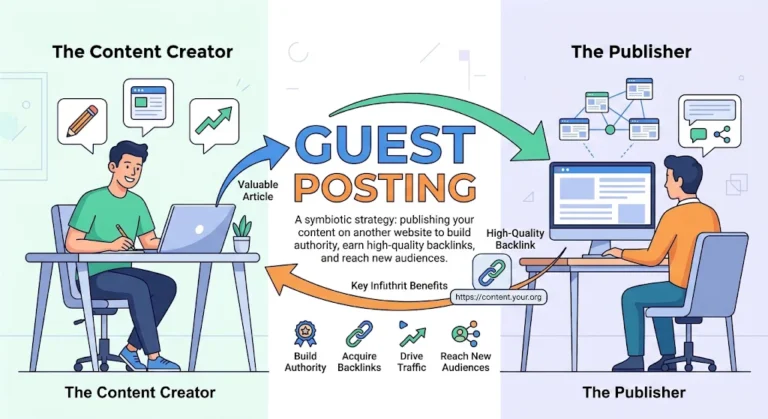
Guest posting is a popular content marketing strategy that involves contributing original articles to relevant third-party websites.
It provides opportunities to share expertise, connect with new audiences, and build relationships with publishers.
To make guest posting effective:
- Identify websites relevant to your industry.
- Review their editorial standards.
- Pitch original and useful article ideas.
- Create high-quality content.
- Follow the publisher’s linking and disclosure policies.
Focus on publishing content that benefits readers rather than treating every guest post as a backlink opportunity.
2. Create Link-Worthy Content
One of the most sustainable ways to earn backlinks is by publishing content that other websites genuinely want to reference.
Examples include:
- Original research and industry reports.
- Comprehensive educational guides.
- Free templates and useful resources.
- Expert interviews.
- Statistics and data-driven articles.
- Practical tutorials and case studies.
When your content provides information that is difficult to find elsewhere, other publishers may naturally reference it.
3. Broken Link Building
Broken link building involves identifying outdated or non-working links on relevant websites and suggesting a useful replacement resource.
For example, a business blog might contain a reference to a guide that no longer exists.
If your website has a relevant and helpful resource, you can politely inform the website owner and suggest it as an alternative.
The key is to provide a genuinely useful replacement rather than sending irrelevant link requests.
4. Digital PR and Media Outreach
Digital PR focuses on earning online coverage and editorial mentions through newsworthy information, research, expert commentary, and useful resources.
Businesses can develop relationships with journalists, editors, and industry publications by offering valuable insights.
A well-executed digital PR campaign can generate brand awareness, referral traffic, and relevant editorial references.
5. Competitor Backlink Research
Analyzing competitors’ backlink profiles can help identify relevant websites, industry publications, and potential content opportunities.
SEO tools such as Ahrefs and Semrush allow users to examine referring domains and understand different backlink patterns.
However, competitor links should be treated as research opportunities, not a checklist to copy blindly.
Evaluate each potential publisher based on relevance, content quality, and editorial credibility.
6. Build Relationships Within Your Industry
Professional relationships can create natural opportunities for collaboration and content sharing.
Consider connecting with:
- Industry bloggers.
- Website editors.
- Business owners.
- Content marketers.
- Journalists.
- Subject matter experts.
Genuine professional relationships often provide more sustainable opportunities than automated outreach campaigns.
Read More: White Hat Link Building Strategies
How to Evaluate Backlink Quality
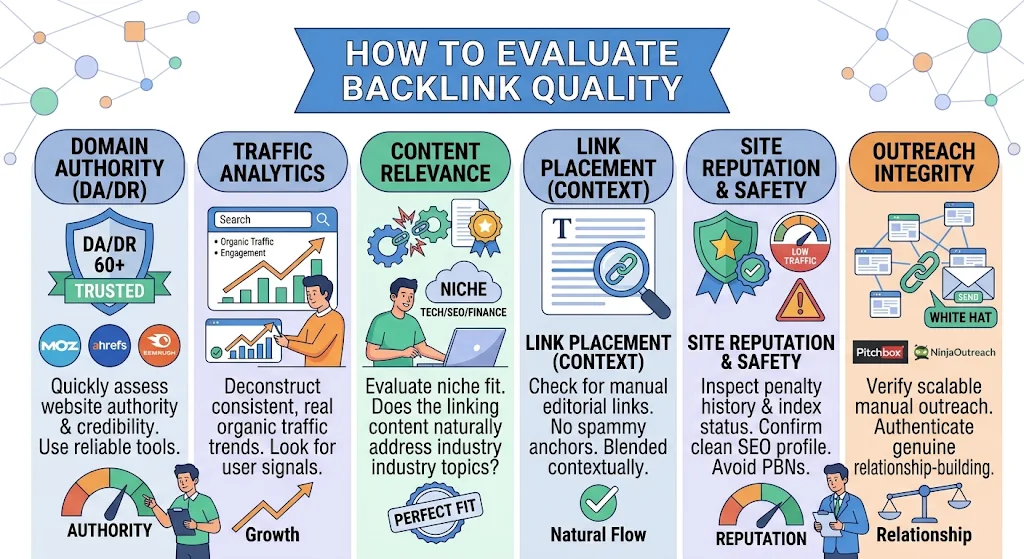
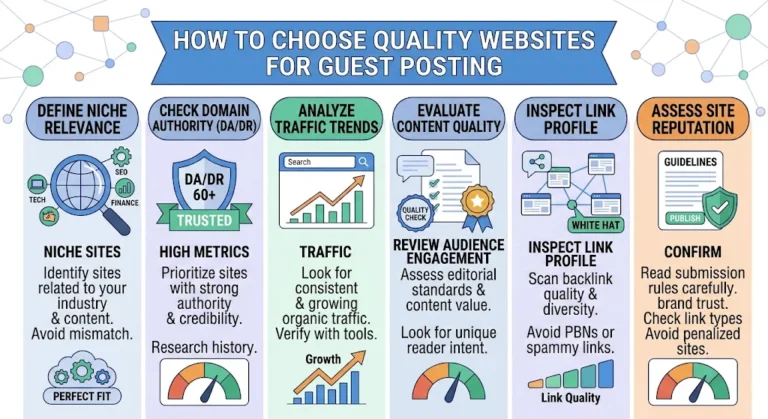
Not every backlink is equally valuable. Before investing time or resources in a link building opportunity, evaluate the website carefully.
Here are some important factors to consider.
Website Relevance
Check whether the website covers subjects connected to your industry.
A relevant website is more likely to introduce your business to an appropriate audience.
Organic Traffic
Review whether the website attracts real visitors through search engines.
Tools such as Ahrefs and Semrush can provide estimated organic traffic data, although these estimates should not be treated as exact figures.
Content Quality
Examine the articles published on the website.
Look for useful information, original writing, proper formatting, and consistent editorial standards.
Backlink Profile
Review the website’s existing backlink profile for suspicious patterns, excessive irrelevant links, or signs of manipulative link schemes.
Website Reputation
Consider the publisher’s reputation, audience, publishing history, and overall credibility.
A high third-party authority score alone is not enough to establish website quality.
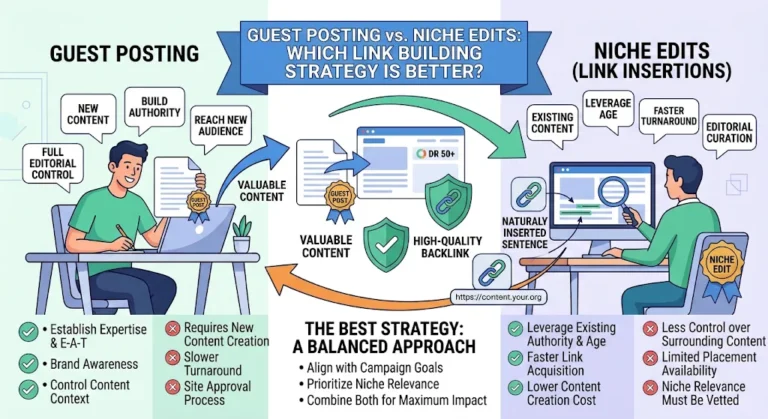
Read More: Guest Posting vs. Niche Edits: Which Link Building Strategy Is Better?
Common Link Building Mistakes to Avoid
Many businesses make mistakes when trying to build backlinks quickly.
Avoid these practices:
Buying links to manipulate rankings: Paid links intended to influence search rankings can violate Google’s spam policies.
Using private blog networks: Websites created primarily to manipulate search rankings can create significant SEO risks.
Excessive exact-match anchor text: Repeatedly using commercial keywords as anchor text can create unnatural backlink patterns.
Focusing only on backlink quantity: A large number of irrelevant or low-quality links does not necessarily improve SEO performance.
Automated link building: Mass-generated comments, forum links, and automated submissions rarely provide meaningful long-term value.
Ignoring content quality: Backlinks cannot replace useful content and a strong website experience.
The best approach is to focus on natural link acquisition, editorial value, and long-term website credibility.
How to Measure Link Building Results
Tracking performance is essential for understanding whether your link building efforts are supporting your business goals.
Here are some metrics worth monitoring:
Referring Domains
Referring domains represent the unique websites linking to your website.
Tracking them can help you understand how your backlink profile develops over time.
Organic Traffic
Monitor organic traffic through Google Analytics and Google Search Console to understand changes in search visibility and website visits.
Keyword Performance
Track the rankings and search impressions of relevant keywords.
Remember that ranking changes cannot always be attributed to backlinks alone.
Referral Traffic
Use Google Analytics to identify visitors arriving through external websites.
This helps measure whether your publishing opportunities are attracting interested audiences.
Backlink Quality
Review the relevance, reputation, placement, and link attributes of newly acquired backlinks.
Quality and context are more meaningful than simply counting links.
Should You Hire a Professional Link Building Agency?
Managing link building internally can require significant time, research, content creation, publisher communication, and ongoing monitoring.
For businesses without a dedicated SEO team, working with a professional agency may make campaign management easier.
A reliable link building agency can help with:
- Backlink opportunity research.
- Relevant publisher identification.
- Guest posting campaigns.
- Content creation and editorial coordination.
- Website quality evaluation.
- Link verification and reporting.
- Long-term link building planning.
Before hiring an agency, review its previous work, communication process, publisher standards, and approach to search engine guidelines.
Avoid providers promising guaranteed Google rankings or thousands of high-quality backlinks within a few days.
A professional agency should prioritize transparency, relevance, content quality, and sustainable SEO practices.
Final Thoughts
Link building remains an important part of a well-rounded SEO strategy. It helps businesses build online relationships, improve content discovery, strengthen brand visibility, and earn relevant editorial references.
However, effective link building requires more than acquiring backlinks. Businesses need to focus on useful content, relevant websites, genuine relationships, and ethical SEO practices.
Whether you manage link building yourself or work with a professional agency, remember that sustainable results come from quality rather than quantity.
At Authority Link Media, our goal is to help businesses strengthen their online presence through relevant guest posting and quality link building opportunities.
Explore our link building services to discover how a well-planned approach can support your website’s long-term SEO goals.