How to Choose Quality Websites for Guest Posting
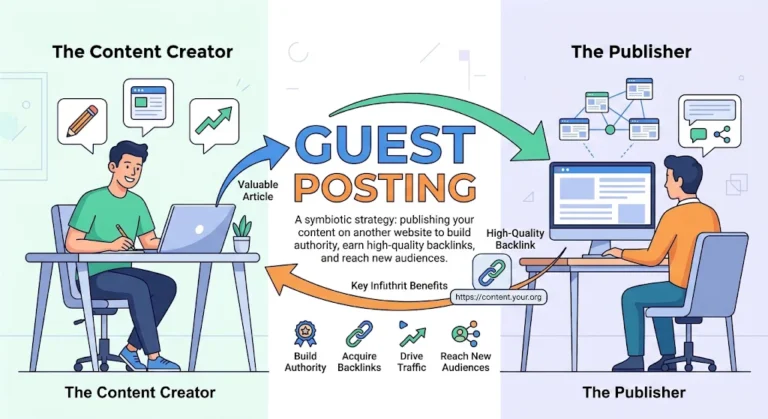
Guest posting is a popular content marketing strategy that helps businesses reach new audiences, build brand awareness, and develop relationships with relevant publishers. However, the success of a guest posting campaign depends heavily on choosing the right websites.
Publishing an article on any website simply to obtain a backlink is not a reliable SEO strategy. A website may have impressive authority metrics but offer little value if its content is unrelated to your industry, its audience is inactive, or its publishing standards are poor.
That is why evaluating guest posting websites is an essential part of every successful campaign.
The right publishing opportunities can help your business connect with relevant readers, earn genuine editorial exposure, and strengthen its online reputation.
In this guide, we will explain how to find quality guest posting websites, evaluate important SEO metrics, identify potential red flags, and select publishers that support your long-term marketing goals.
What Are Quality Guest Posting Websites?
Quality guest posting websites are reputable online publications that accept valuable contributions from external writers and publish content that benefits their target audiences.
These websites generally maintain consistent editorial standards, publish original information, and cover subjects relevant to their industry.
For example, if you operate a digital marketing agency, suitable publishing opportunities might include:
- SEO and digital marketing blogs.
- Business and entrepreneurship websites.
- Technology publications.
- Content marketing platforms.
- Online business magazines.
- Relevant industry-specific publications.
A good guest posting website should provide more than an opportunity to place a link. It should offer genuine audience relevance, useful content, and a credible publishing environment.
Why Is Choosing the Right Guest Posting Website Important?
Website selection can significantly influence the value of a guest posting campaign.
Here are some reasons why choosing suitable publishers matters.
1. Improves Audience Relevance
Publishing on websites related to your industry helps introduce your business to people who are more likely to be interested in your products or services.
For example, a link building agency publishing an article on an SEO blog can reach marketers, business owners, and website managers.
This is generally more useful than publishing on an unrelated website simply because it has a high authority score.
2. Supports Natural Backlink Acquisition
Relevant editorial references can help search engines understand relationships between websites and discover useful content.
However, links should serve a genuine editorial purpose. Paid placements intended to manipulate search rankings should be properly qualified under applicable search engine guidelines.
3. Builds Brand Credibility
Contributing informative articles to established publications can help demonstrate your expertise.
When readers consistently find your contributions useful, they may become more familiar with your brand and recognize your business as a relevant industry resource.
4. Generates Referral Traffic
A relevant guest article can attract visitors who want to learn more about your services or expertise.
These visitors may click through to your website to explore additional guides, resources, or business solutions.
5. Creates Long-Term Publishing Opportunities
Working with reputable publishers can help build professional relationships.
These relationships may create opportunities for future articles, interviews, industry collaborations, and other content marketing activities.
10 Factors to Evaluate Before Choosing a Guest Posting Website
Before submitting an article or investing in a publishing opportunity, carefully evaluate the website.
The following factors can help you make better decisions.
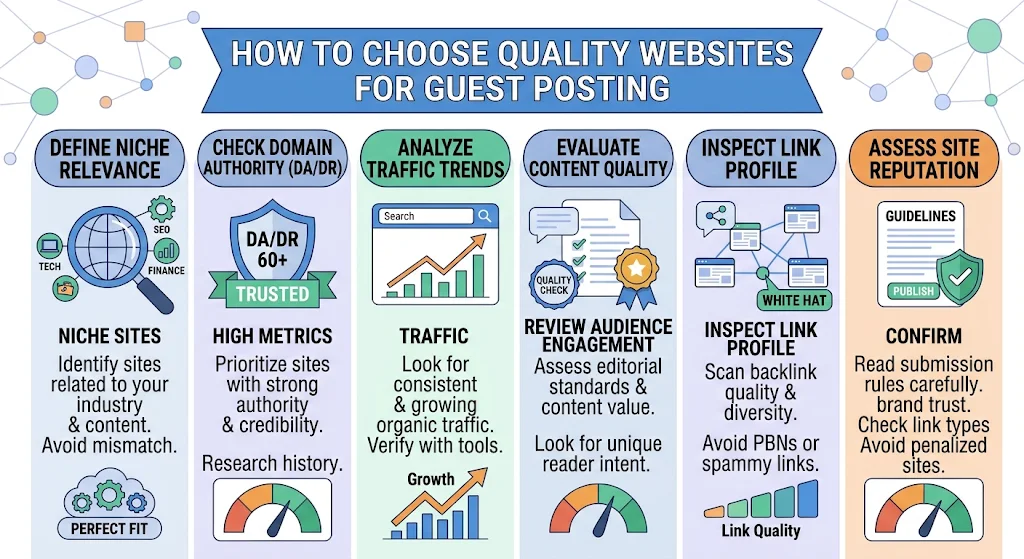
1. Check Niche Relevance
Niche relevance should be one of your first considerations.
A website should publish content that is meaningfully connected to your business, industry, or target audience.
For example:
- An SEO agency should prioritize marketing and business publications.
- A software company should consider technology and SaaS websites.
- A financial consulting business should explore finance and entrepreneurship platforms.
- An eCommerce business may benefit from retail and online business publications.
Review the website’s existing articles and categories before deciding whether it is suitable.
A relevant publisher can provide better audience exposure than an unrelated website with impressive SEO metrics.
2. Analyze Organic Traffic
Organic traffic refers to visitors who arrive at a website through unpaid search engine results.
A website with consistent organic visibility may offer useful audience exposure.
You can use tools such as Ahrefs, Semrush, and Google Search Console (when you have access to the property) to investigate different aspects of search performance.
Look for:
- Consistent organic visibility.
- Relevant ranking keywords.
- Meaningful search impressions.
- Evidence of genuine audience interest.
- Reasonable traffic trends over time.
Be cautious of websites showing unusual traffic spikes or significant declines.
Remember that third-party traffic estimates are not exact. Always consider the broader website quality rather than relying on one traffic figure.
3. Review Domain Authority and Domain Rating
Domain Authority (DA) and Domain Rating (DR) are third-party SEO metrics used to compare websites.
Moz provides Domain Authority, while Ahrefs provides Domain Rating.
These metrics can be useful for evaluating websites, but they are not official Google ranking factors.
A website with a higher DR or DA is not automatically a better guest posting opportunity.
For example, a relevant industry website with moderate authority and genuine readers may offer more marketing value than an unrelated website with a much higher score.
Use authority metrics as supporting indicators rather than the only selection criteria.
4. Examine Website Content Quality
Content quality reveals a lot about a website’s editorial standards.
Before choosing a publisher, review several recently published articles.
Look for:
- Original and informative content.
- Clear article structure.
- Proper grammar and readability.
- Relevant images and examples.
- Helpful information for readers.
- Consistent editorial quality.
Avoid websites filled with thin, repetitive, poorly written, or heavily promotional articles.
A quality publisher should care about the information it provides to its audience.
5. Check Website Backlink Profile
A website’s existing backlink profile can provide useful information about its reputation and link acquisition practices.
SEO tools such as Ahrefs and Semrush can help examine:
- Referring domains.
- Backlink relevance.
- Anchor text distribution.
- Link growth patterns.
- Suspicious or irrelevant linking activity.
Look for natural patterns and links from relevant sources.
Be careful with websites that appear to participate in large-scale link schemes or have backlink profiles dominated by unrelated, suspicious sources.
No single metric can determine whether a website is trustworthy. A proper evaluation should consider multiple signals.
6. Evaluate Website Publishing Frequency
Publishing consistency can help you understand whether a website is actively maintained.
Check:
- The publication dates of recent articles.
- Whether content appears regularly.
- Whether older content is maintained.
- Whether the website has active editorial categories.
A website that publishes useful content consistently may offer better opportunities for long-term audience exposure.
However, publishing frequency alone does not determine quality.
7. Review Audience Engagement
Audience engagement can help you understand whether people interact with a website’s content.
Consider:
- Meaningful comments.
- Social media discussions.
- Content sharing.
- Brand mentions.
- Community activity.
Not every good website has a large comment section, so engagement should be evaluated in context.
Look for signs that the website serves a genuine audience rather than existing primarily for backlink sales.
8. Check Guest Posting Guidelines
A professional publisher should have clear editorial expectations.
Review its guest posting guidelines to understand:
- Accepted topics.
- Article length requirements.
- Content originality rules.
- Formatting requirements.
- Author bio policies.
- External linking guidelines.
- Sponsored content disclosure requirements.
Following these guidelines increases the likelihood that your article will meet the publisher’s standards.
9. Review Existing External Links
Examine how the website links to external sources in its published articles.
Are the links relevant to the topic? Do they provide additional information? Are commercial links handled transparently?
A website that consistently publishes useful references may demonstrate stronger editorial standards.
Be cautious if almost every article contains numerous unrelated commercial links.
10. Evaluate Overall Website Reputation
Finally, consider the website as a complete publication.
Check its About page, contact information, editorial policies, company details, and publishing history.
Look for a consistent identity and a clear reason for the website to exist.
A publisher should provide real value to its audience rather than functioning primarily as a platform for selling backlinks.
Best Tools to Find and Evaluate Guest Posting Websites
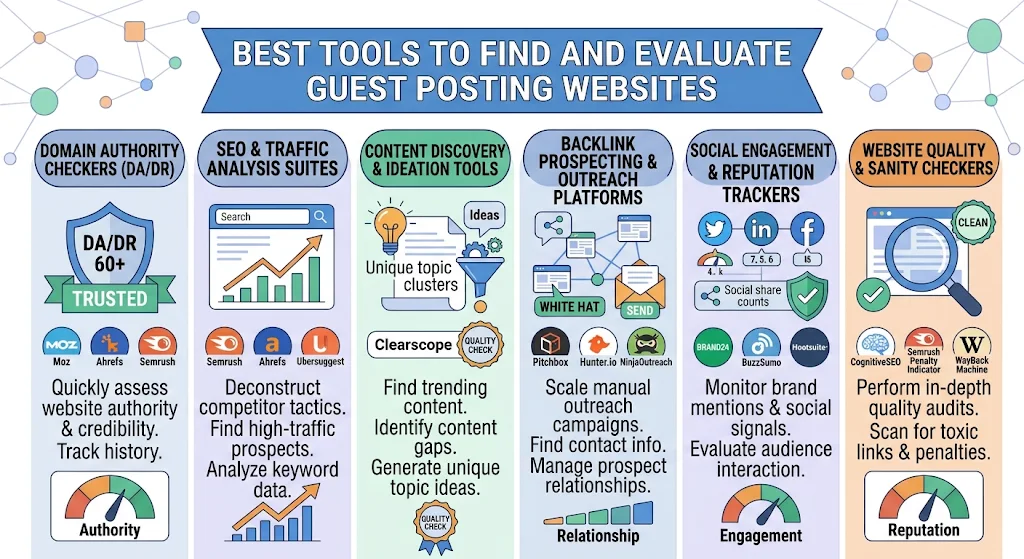
Using appropriate SEO tools can make publisher research more organized and efficient.
Here are some popular tools worth considering.
Ahrefs
Ahrefs is an SEO platform that offers backlink analysis, competitor research, keyword research, and website evaluation features.
It can help identify referring domains, analyze backlink profiles, and discover potential publishing opportunities.
Semrush
Semrush provides SEO and digital marketing tools for keyword research, competitor analysis, backlink auditing, and domain research.
It can help businesses understand their competitors’ backlink sources and identify relevant websites.
Moz
Moz provides SEO tools, including Domain Authority and link research features.
Its metrics can help compare websites, although they should never be treated as direct Google ranking measurements.
Google Search Operators
Google search operators can help discover websites that publish guest articles or cover specific industry topics.
For example, you can try searches such as:
- “write for us” + digital marketing
- “guest post guidelines” + SEO
- “contribute an article” + business
- “submit a guest post” + technology
- “become a contributor” + marketing
These searches can help identify potential publishers, but every website still needs manual evaluation.
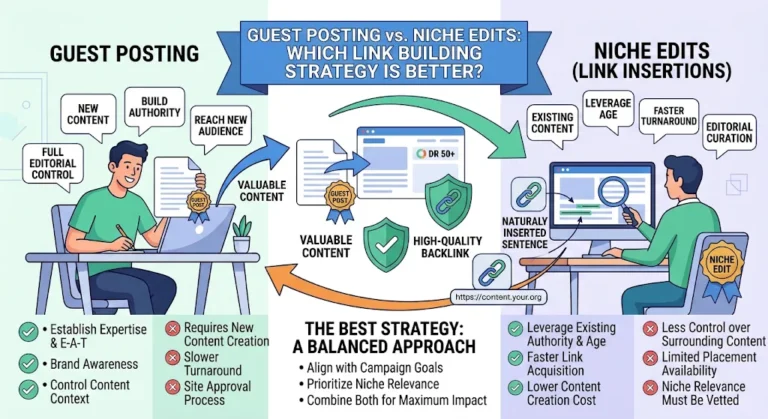
Read More: Guest Posting vs. Niche Edits: Which Link Building Strategy Is Better?
Red Flags to Avoid When Selecting Guest Posting Websites
Not every website advertising guest posting opportunities is trustworthy.
Here are some warning signs to consider.
Unrelated publishing categories: Websites covering too many unrelated subjects may have weak topical focus.
Excessive sponsored articles: A website publishing large volumes of promotional content without meaningful editorial standards deserves closer inspection.
Unnatural backlink patterns: A suspicious backlink profile may indicate manipulative link building practices.
Low-quality content: Poorly written and repetitive articles can indicate limited editorial oversight.
Fake traffic claims: Be cautious of publishers making unrealistic traffic or authority promises without supporting evidence.
Guaranteed ranking promises: No publisher or agency can legitimately guarantee specific Google ranking positions through a backlink.
Lack of transparency: Missing company details, unclear policies, and unreliable communication can be warning signs.
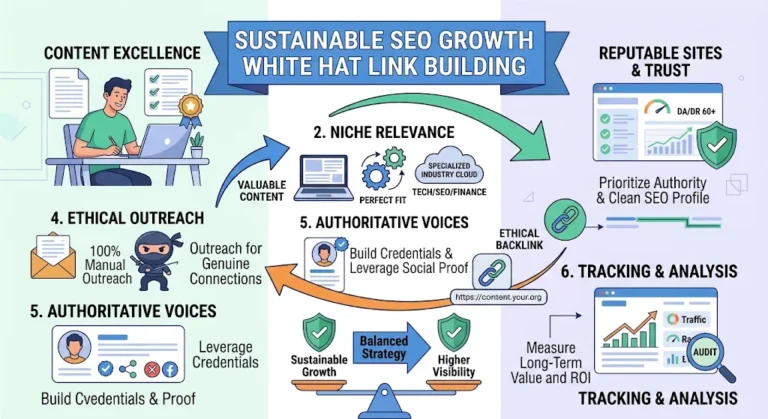
Avoiding these red flags can help protect your marketing budget and maintain a responsible SEO strategy.
How to Build a Quality Guest Posting Website List
Once you understand the evaluation criteria, create an organized list of potential publishers.
Follow these steps:
Step 1: Define Your Target Niche
Identify the industries and audiences relevant to your business.
Step 2: Discover Potential Websites
Use search engines, industry publications, competitor research, and professional networks to find publishers.
Step 3: Evaluate Each Website
Review relevance, content quality, traffic estimates, backlink profile, and reputation.
Step 4: Organize Your Research
Create a spreadsheet with useful information such as:
- Website name and URL.
- Industry or niche.
- Estimated organic traffic.
- DA or DR.
- Content quality notes.
- Guest posting guidelines.
- Contact information.
- Editorial and sponsored link policies.
- Final evaluation status.
Step 5: Contact Suitable Publishers
Prepare personalized outreach messages and suggest article ideas that match the publisher’s audience.
Step 6: Monitor Published Articles
After publication, verify the article, check its links and attributes, and record the publication details.
This process helps maintain a more organized and transparent guest posting campaign.
Should You Hire a Professional Guest Posting Agency?
Finding suitable websites, evaluating publishers, preparing content, and coordinating publication can require considerable time and expertise.
For businesses without an experienced SEO team, working with a professional guest posting agency may simplify the process.
A reliable agency can help with:
- Relevant website research.
- Publisher quality evaluation.
- Guest posting opportunity discovery.
- Original article creation.
- Publisher outreach.
- Editorial coordination.
- Link verification.
- Transparent campaign reporting.
Before hiring an agency, ask how it selects websites, evaluates publisher quality, handles sponsored links, and reports completed placements.
Avoid agencies that promise guaranteed rankings or focus exclusively on high DA and DR numbers.
The best provider should prioritize relevant websites, useful content, and transparent publishing practices.
Final Thoughts
Choosing quality websites is one of the most important steps in building an effective guest posting campaign.
A website with strong topical relevance, useful content, genuine audience interest, and responsible editorial practices can provide meaningful marketing opportunities.
Rather than selecting publishers based only on DA, DR, or estimated traffic, evaluate the entire website and consider how well it serves your target audience.
By focusing on quality, relevance, and transparency, businesses can build a more sustainable guest posting strategy.
At Authority Link Media, we believe that successful guest posting starts with choosing the right publishing opportunities. Our approach focuses on relevant websites, quality content, and responsible link building practices designed to support long-term business growth.
Explore our guest posting services to discover relevant publishing opportunities for your website.